

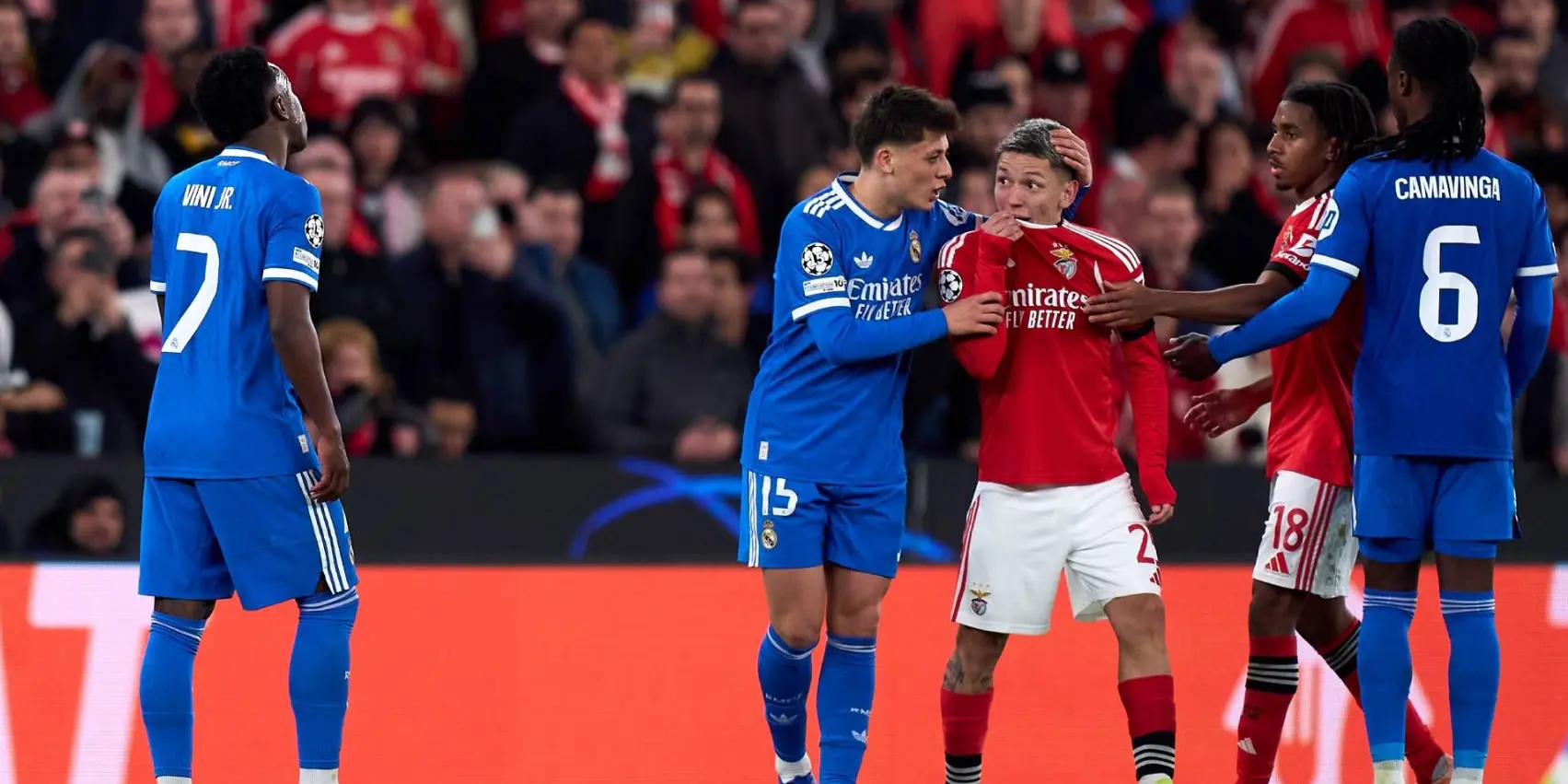
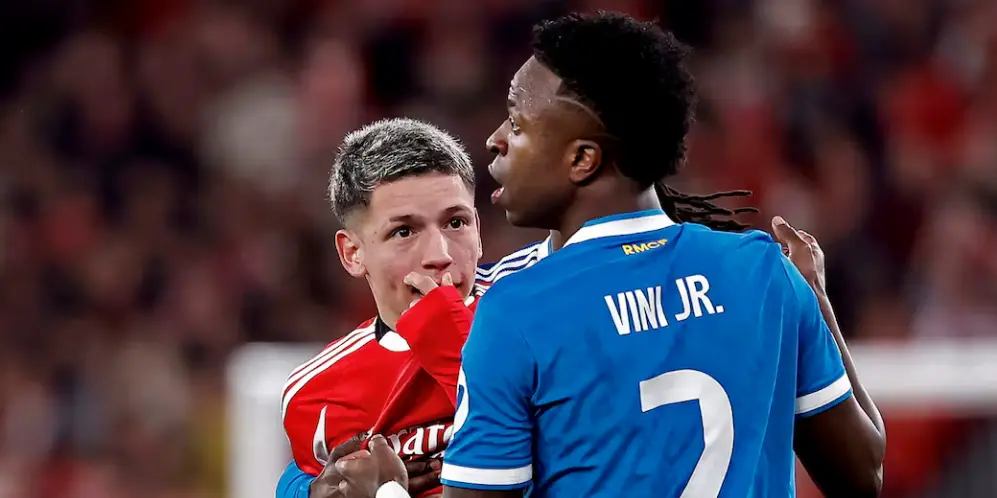
In the first leg of the Champions League round-of-16 play-off, Real Madrid faced Benfica away from home. Vinícius Júnior received a yellow card for his celebration after scoring, and was then subjected to alleged racist verbal abuse by Gianluigi Prestianni, leading the match to activate the anti-racism suspension protocol temporarily.After the incident, almost all of European football focused its attention on this case. However, a few days later, Real Madrid centre-back Dean Huijsen was found to have shared discriminatory content targeting Asian people on social media, causing widespread dissatisfaction among the Asian community. Yet Real Madrid failed to issue a sincere, substantial apology. Is the slogan “No Room for Racism” just an empty promise for Real Madrid?
1. How many times has Vinícius Júnior suffered racial discrimination?
Since 2021, as Vinícius has developed into a world-class star, the total number of racial discrimination cases directly or indirectly related to him has reached 26.
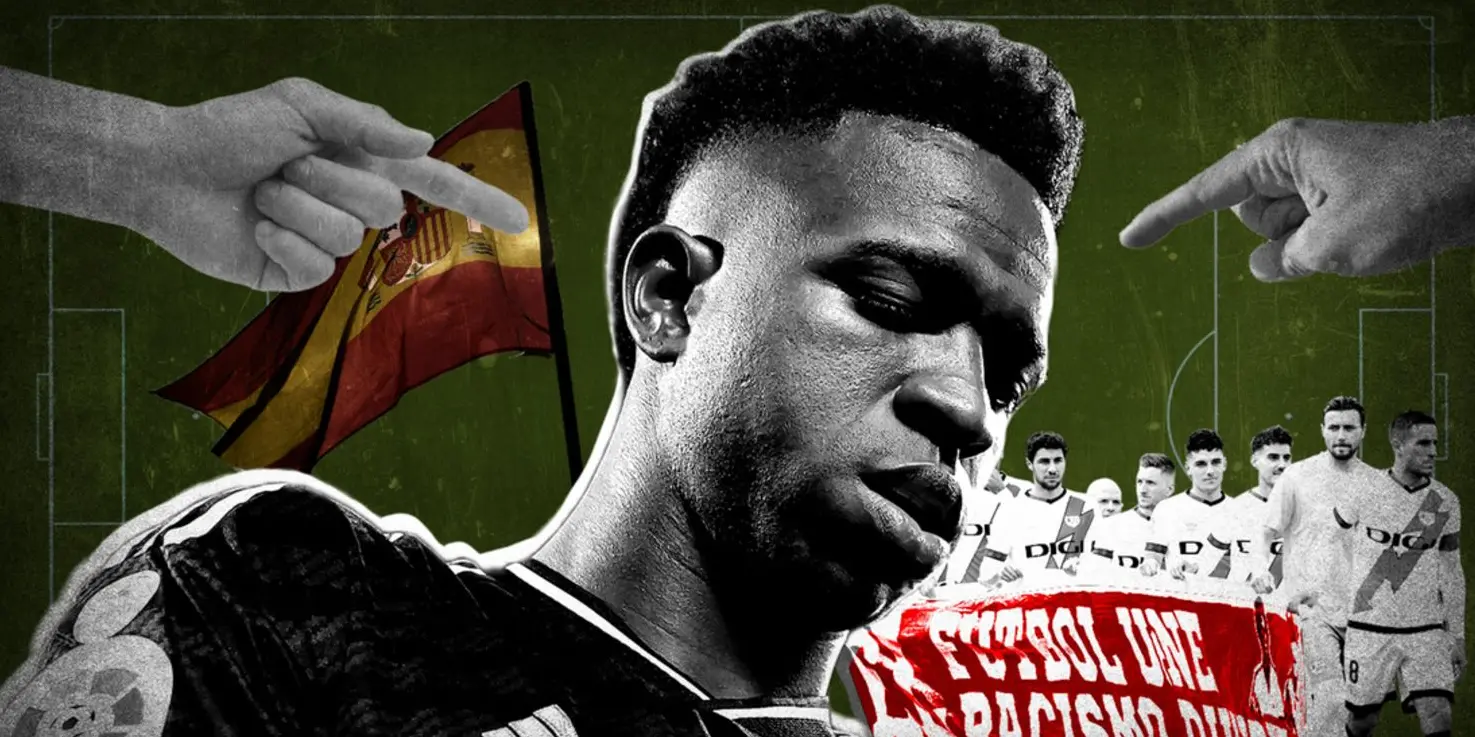
During 2021–2022, Vinícius was subjected to racist slurs such as “monkey” at the home grounds of Barcelona, Mallorca, Atlético Madrid, and Valladolid, but these incidents received little attention from authorities at the time.On 26 January 2023, hours before the Copa del Rey match between Real Madrid and Atlético Madrid at the Santiago Bernabéu, several fans hung a mannequin wearing a Vinícius jersey on a bridge at Real Madrid’s Valdebebas training ground, along with a banner reading “Madrid Hates Madrid”. The Spanish National Court classified this as a hate crime, sentencing one offender to 22 months in prison and three others to 14 months.
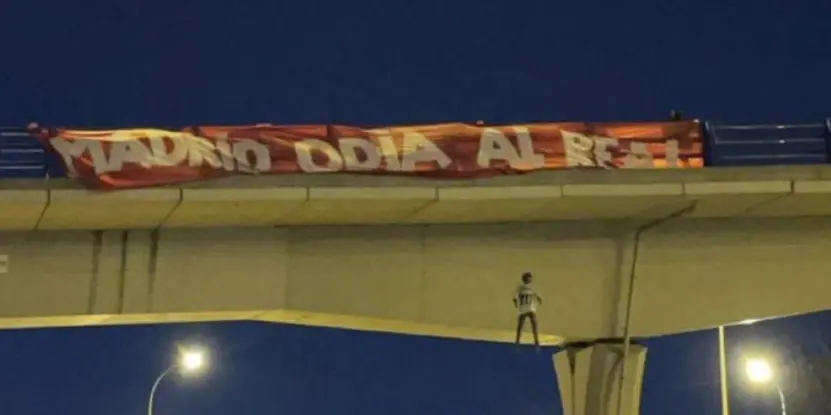
This was the first time discrimination against Vinícius had reached a legal level.Subsequently, fans were banned from football activities for months and ejected from stadiums for directing racist slurs at Vinícius during matches against Betis, Atlético Madrid, Sevilla, Real Sociedad, and Albacete. Even during the match between Atlético Madrid and Inter Milan, fans chanted racist insults targeting Vinícius.
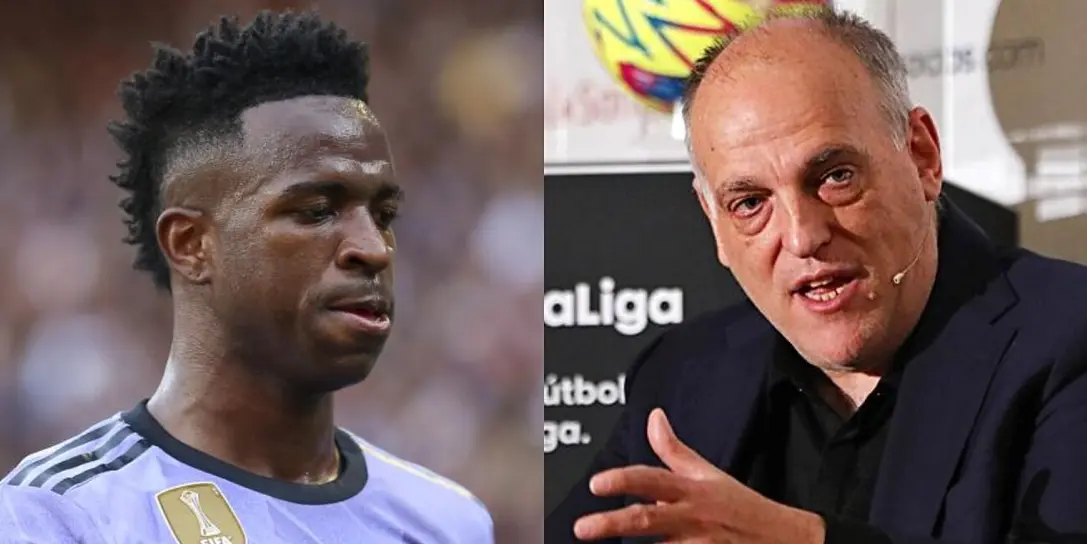
It is clear that Vinícius has suffered severe discrimination on various pitches. At the same time, these well-documented discriminatory incidents have been questioned by some industry professionals.The Brazilian winger had a verbal clash with LaLiga president Javier Tebas. Tebas insisted that LaLiga had been working hard to combat racism and that such cases were isolated incidents.Vinícius hit back at Tebas: “The LaLiga president did not criticise the racists, but attacked me. Silence makes you no better than a racist.”Vinícius also made a controversial remark that caused a wider backlash: “If there is no further action against racism, Spain should be stripped of the right to host the 2030 World Cup. If players feel uncomfortable and unsafe in a country where racism exists, it becomes complicated.”Whether poorly phrased or genuinely held, this comment effectively labelled the entire country negatively, triggering strong pushback.Madrid Mayor Almeida stated: “Vinícius has the full support of Spanish society in fighting racism, but we cannot stand with him when he calls all of Spain and Madrid racist. He has suffered regrettably, but that does not mean the whole of Spanish society should be branded racist.”
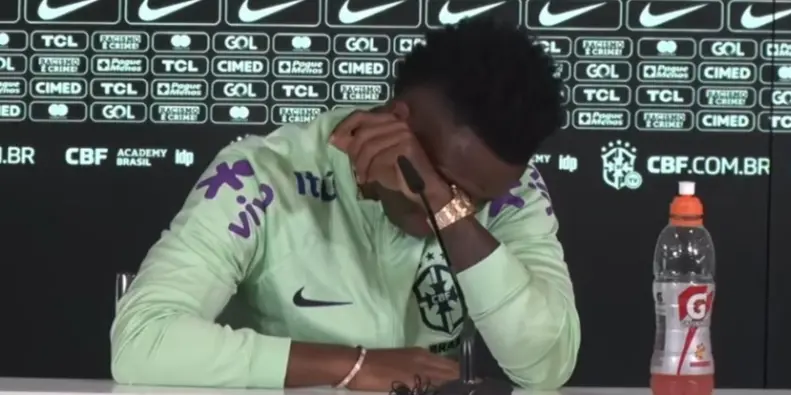
At the pre-match press conference for the 2024 friendly between Brazil and Spain, Vinícius was asked about racism and became emotional, shedding tears.Vinícius said racist incidents happen every day and in every match, and each one leaves him deeply saddened. Such abuse occurs not only in Spain but worldwide.He left Brazil at a young age to play abroad and has endured racism for a long time, leaving him increasingly unwilling to play football.What saddens him most is that those responsible often go unpunished. He has filed many complaints over racism, but none have led to consequences.“Football is very important, but fighting racism is the most important thing. I hope to achieve equality for everyone soon, so everyone can live in peace. I’m sorry. All I want to do is play well and give everything for my team and family.”
2. Is UEFA’s punishment reasonable?
On 23 February, UEFA officially announced that, following the appointment of a UEFA ethics and disciplinary inspector to investigate alleged discriminatory conduct during the Champions League play-off between Benfica and Real Madrid on 17 February 2026, and acting on a request in the inspector’s interim report, the UEFA Control, Ethics and Disciplinary Body had decided to impose a one-match provisional suspension on Mr Gianluigi Prestianni for a prima facie violation of Article 14 of the UEFA Disciplinary Regulations concerning discriminatory behaviour.
Benfica publicly supported their player twice in official statements and filed an appeal even though they knew it could not affect the second leg.The wording of the announcement sparked controversy across European football. UEFA used the extremely rare legal term “prima facie” in its statement banning Prestianni for breaching Article 14.A sports lawyer explained to the media: “In legal terms, it means something appears proven or sufficient based on available preliminary information, even if it may still be disputed later.”In other words, UEFA issued a preliminary punishment based only on an analysis of the incident, regardless of any contradictory defence from Prestianni.
The controversy centres on UEFA imposing a suspension before the full evidence chain was clear.On whether Prestianni should be punished, COPE radio commentator David Sánchez said: “I am convinced the opponent said the word ‘monkey’—I have no doubt. But if I do not have footage of him saying it, I cannot punish anyone.”Sánchez’s view was supported by other commentators. Senabre noted that, in the absence of video evidence, the only option is to rely on the referee team’s testimony; otherwise, it becomes a case of conflicting accounts. While he stated he 100% supports Vinícius, he acknowledged the difficulty of resolving such cases.Luis García and Senabre warned that punishing a player without conclusive evidence carries risks and would set a precedent, allowing players to fabricate similar incidents to get opponents punished in the future.
Spanish newspaper Mundo Deportivo questioned whether different standards apply when Real Madrid is involved.In this case, the rules used to defend the truth no longer seemed important to many. Instead, the decisive factor was Vinícius’ accusation to the referee that Prestianni called him a “monkey”.Furthermore, cameras did capture the Brazilian forward insulting Prestianni: “Coward, you fucking coward”, and directing an abusive, homophobic and racist-tinged remark at Mbappé—none of which were investigated.Atlético Madrid President Cerezo said in an interview: “This is not an individual issue but a systemic one, because this ruling will trigger a series of major problems. I am not judging whether it is fair or not, but it will cause many issues.”
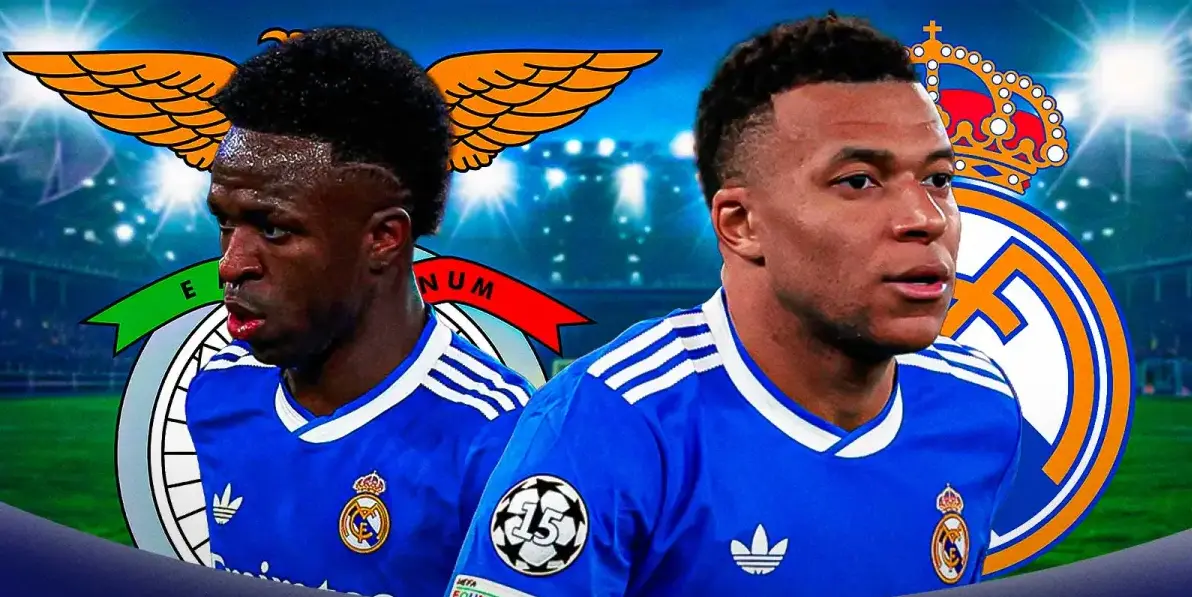
Under the consensus of “No Room for Racism”, racism has become a clear red line in world football since 2020. UEFA’s use of the prima facie principle for punishment is highly unusual and almost exceptional, though it has happened before.In 2021, the racist allegation case between Ondřej Kudela of Slavia Prague and Glen Kamara of Rangers was decided using the same principle. Kudela received a one-match ban and was later found guilty of racial discrimination. However, that process took more than ten days longer than this ruling, which was issued so quickly it affected the second leg.Some observers pointed out that the match between Benfica and Real Madrid has far greater influence than Slavia Prague vs Rangers. This time, the case had international media attention that the 2021 incident lacked. That punishment passed quietly in the media without widespread debate.UEFA clearly treated Prestianni’s statement to investigators, his reaction of covering his mouth with his shirt, his indifferent attitude when accused on the pitch, referee Letexier activating the anti-racism protocol, and the firm testimonies of Vinícius and his teammate Mbappé as highly reliable evidence for this decision.Whether this will create a deeper “broken window effect” in European football remains to be seen.
3. Why has Huijsen been accused of discrimination by Asian people?
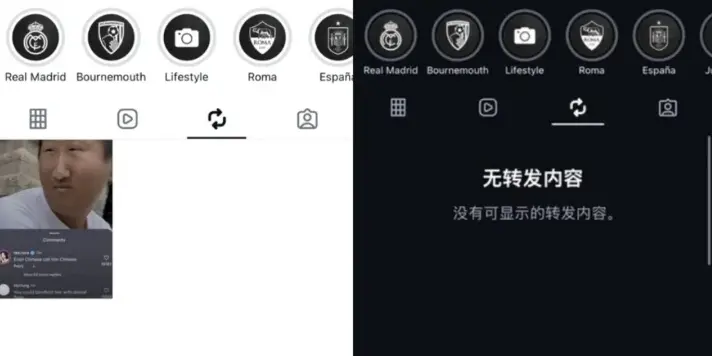
On 21 February, 20-year-old Dutch-Spanish player Dean Huijsen, who has over 5.2 million Instagram followers, reposted a review of an Asian film.The image attached to the repost maliciouslyCapture comments from the section, including phrases such as “Even Chinese people call him Chinese” and “You could cover his eyes with dental floss”.The latter is widely viewed in Western contexts as a racist slur mocking the eye shape of Asian people, especially Chinese or East Asian facial features.
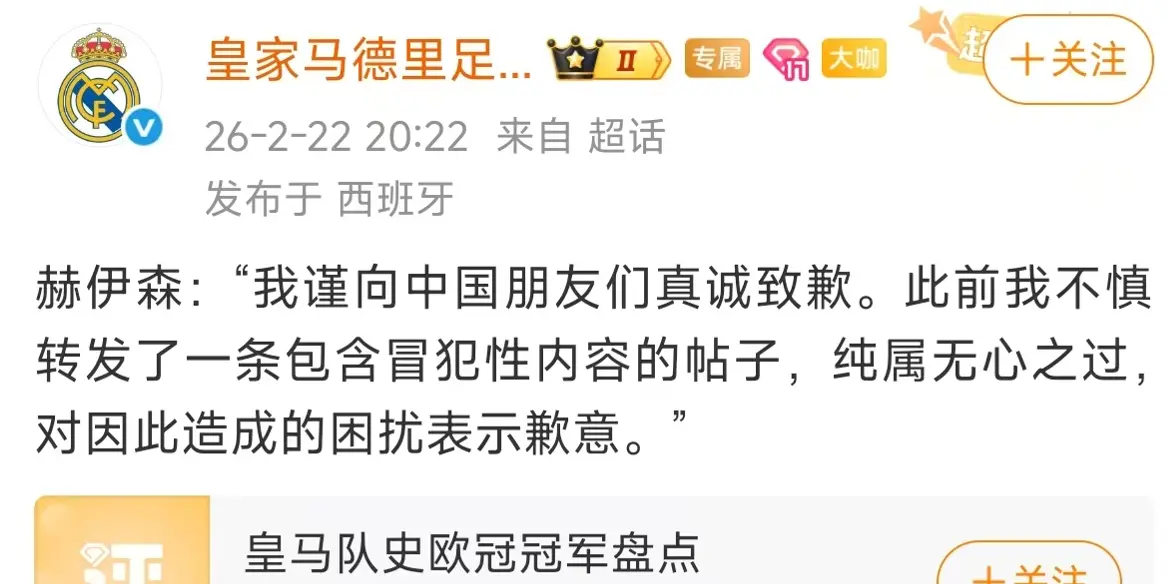
The incident immediately triggered strong dissatisfaction among mainly Chinese and some Asian fans, who expressed their anger on Chinese social media and in the comment section of Huijsen’s personal Instagram account.After being accused of racism, Huijsen quickly deleted the repost and issued an apology on Weibo, one of China’s largest social media platforms:“I sincerely apologise to my Chinese friends. I inadvertently reposted a post containing offensive content, which was a completely unintentional mistake. I apologise for any distress caused.”
Although Real Madrid’s apology aimed to calm public anger, it sparked further dissatisfaction among Chinese fans, who viewed it as insufficient and region-specific.The statement was only published on the club’s China-focused Weibo account and did not appear on Huijsen’s Instagram or X (Twitter), nor on the club’s global official channels.This led to accusations of a “China-only apology”, with many criticising it as formalistic and insincere.Comments on Weibo reflected widespread disappointment. Fans demanded a global apology from the club and questioned why Real Madrid had quickly supported players such as Vinícius against racism but responded poorly this time.One Weibo user commented: “This is an example of double standards. Vinícius gets full club support, while Chinese fans only get a rushed Weibo statement?”Others expressed feelings of unequal treatment, calling Huijsen’s behaviour “public discrimination” and accusing Real Madrid of trying to “hide” the incident from global fans.
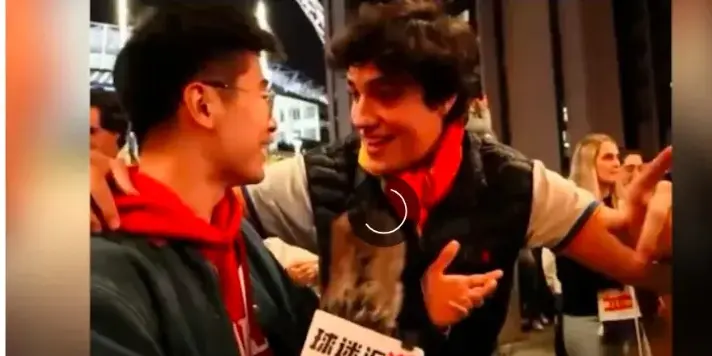
This is not the first time Real Madrid has been involved in a controversy involving discrimination against Chinese fans.In 2024, the club was caught up in a similar row when a Real Madrid fan sang a song deemed vulgar before the Champions League final against Borussia Dortmund. The Chinese Embassy in Spain called the song “blatantly racist, anti-China, and vile in nature”.In a previous statement, Real Madrid rejected the fan’s “inappropriate behaviour”, condemned “all forms of racism and xenophobia”, defined the incident as “an isolated act by an individual fan” that did not represent the club’s values, and reaffirmed its “appreciation and respect” for Chinese fans.
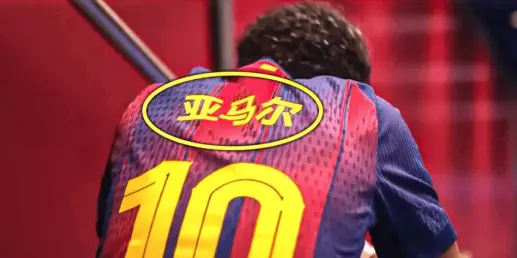
In nearby Catalonia, Barcelona held events to show respect for Chinese culture before matches: players wore jerseys with printed Chinese names, dragon dances were performed outside the stadium, and greetings were sent to Chinese Barça fans during matches.Compared with Real Madrid’s perfunctory response, Barcelona’s actions were widely praised by Chinese fans.
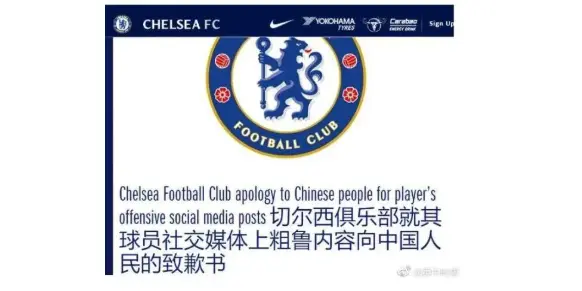
A similar incident occurred with Chelsea in July 2017. During the Premier League side’s pre-season tour in China, Brazilian youngster Kennedy posted content on social media that hurt the feelings of the Chinese people.He first uploaded a video with the caption “Porra China” — “Porra” is clearly an offensive Portuguese swear word. In another video, he filmed a Chinese security guard leaning against a door with the caption “Wake up, China”, full of contempt and provocation.Despite Kennedy’s excuses, he was excluded from the pre-season squad.Chelsea initially tried a mild statement similar to Real Madrid’s, but under public pressure, the club issued a substantial response on 23 July: a formal bilingual (English and Chinese) apology letter published on the official website and shared on Twitter.Public opinion generally recognised Chelsea’s sincere apology. Although some called for specific penalties, the club’s crisis management at least defused the situation.In Real Madrid’s case, beyond the insincere apology, the club has not promised any punishment for Huijsen.Social media is full of sarcasm, with many believing the apology was “only sent by the China operation team” and that the player himself may not even know about it.
4. Similarities and differences between racism against Yellow and Black people in football
After a long struggle, Black people have gradually built internal solidarity against discrimination, and the external red line against anti-Black racism has become increasingly strict.However, discrimination against Asian people seems to have a much lower red line in the West. Spanish media coverage of this incident used the term “considerada racista” — “considered racist” — meaning acts of anti-Asian discrimination, such as mocking Chinese people with “slanted-eye” gestures or using slurs like “ching chong”, are often not widely recognised as racist in Europe.
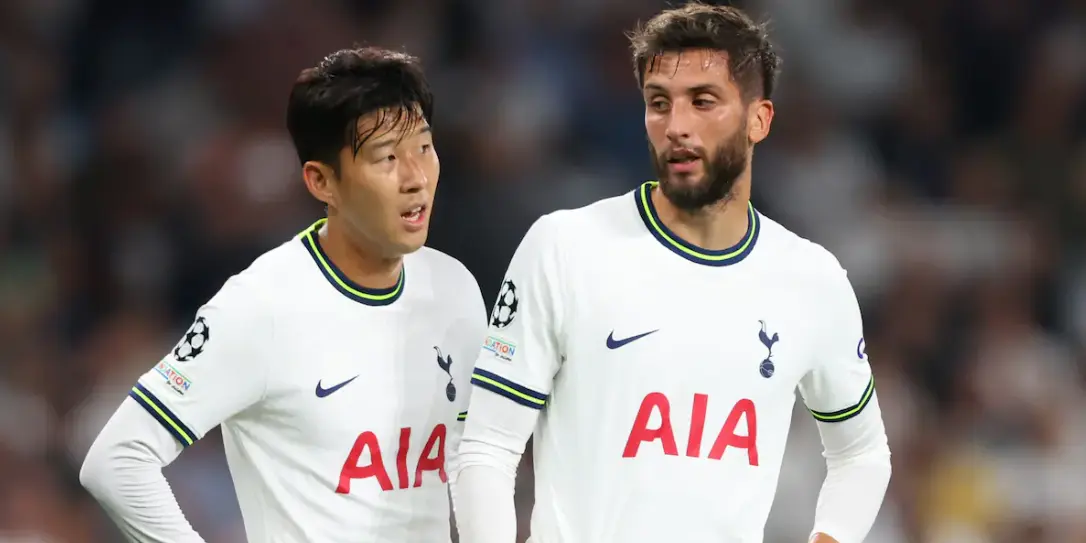
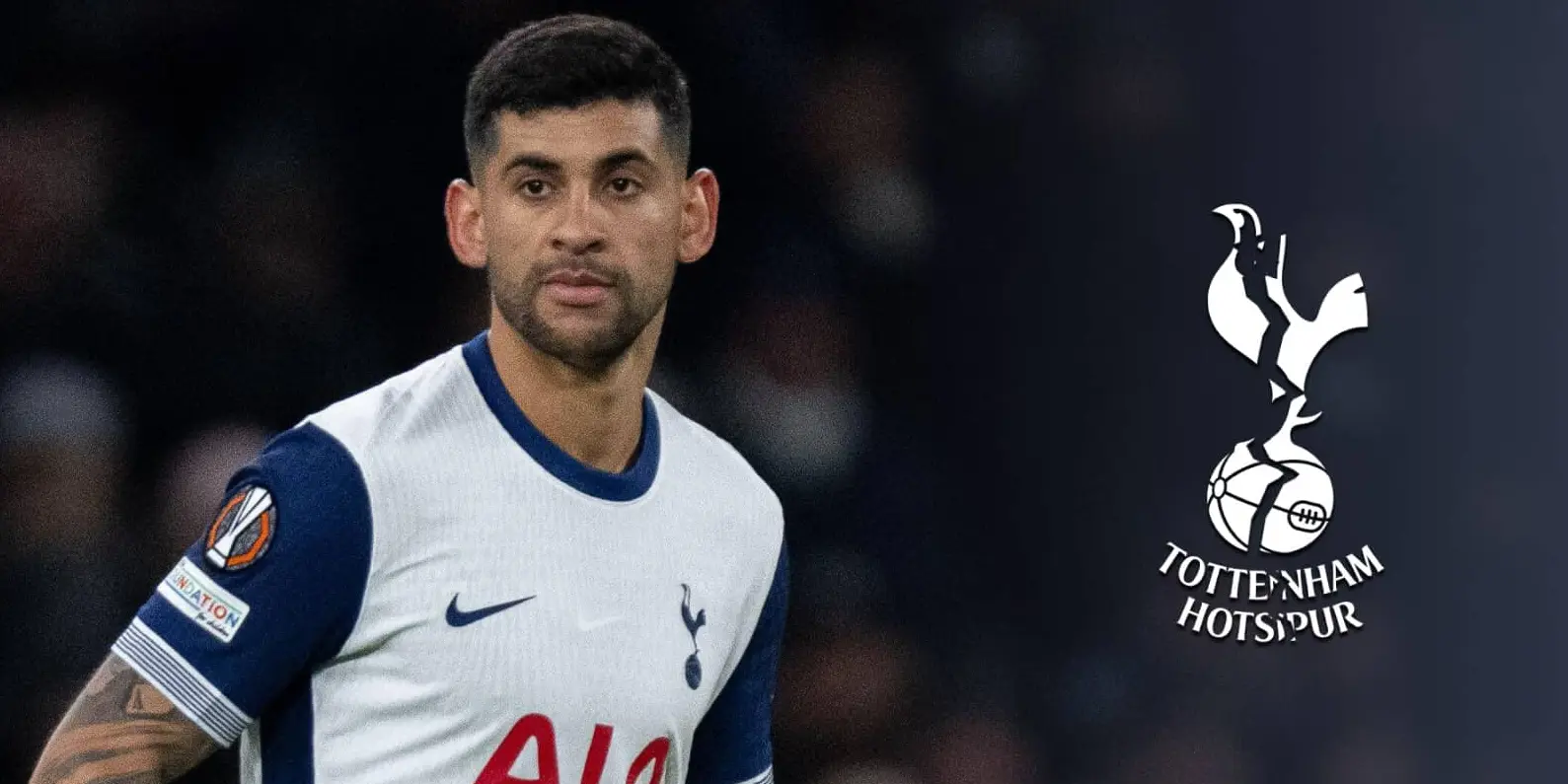
The case that first made European fans widely aware that anti-Asian discrimination should carry the same penalty as anti-Black racism involved Son Heung-min, widely regarded as the best Asian footballer in history.During his time at Tottenham Hotspur, the South Korean star suffered racist comments from teammate Rodrigo Bentancur.When asked by a Uruguayan TV host for Son’s jersey, Bentancur made a highly inappropriate joke: “You mean Sonny’s? Or his cousin’s jersey? They all look the same anyway.”The comment quickly sparked huge controversy, as it touched on the classic racist stereotype that “all Asians look alike”.Although Son generously forgave his teammate, saying he had “made a mistake”, the FA did not show leniency.In November 2024, the FA banned Bentancur for seven matches and fined him £100,000, ruling his comments a serious violation.Furthermore, Son has repeatedly faced “slant-eye” gestures from opposing fans during his years in the Premier League; most of those fans were later banned from stadiums or charged.
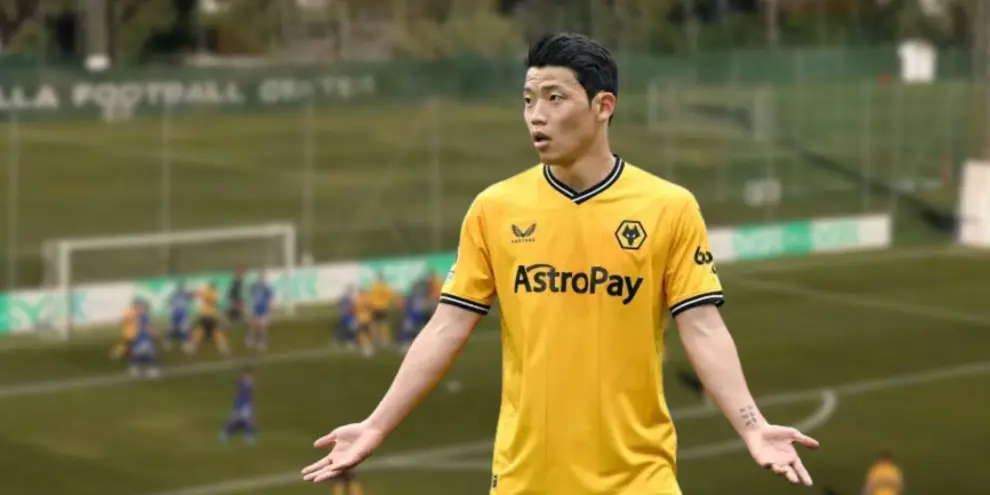
Hwang Hee-chan, currently a forward at Wolverhampton Wanderers, was also allegedly subjected to racism during a friendly against Italian side Como.Teamanmate Pedro Neto punched an opponent to defend Hwang and was sent off. Wolves reportedly filed an appeal to UEFA.Como officially responded that the player called Hwang “Jackie Chan”, saying: “We asked the defender what he said. He told us his comment to Hwang was ‘Ignore him, he thinks he’s Jackie Chan’.”Como claimed there was no racist intent.But in Western contexts, this kind of comment relies on the same “all Asians look alike” stereotype seen across Europe. Such discriminatory language should be universally understood as racism, just as insults like “monkey” directed at Vinícius are clearly racist.
5. Conclusion
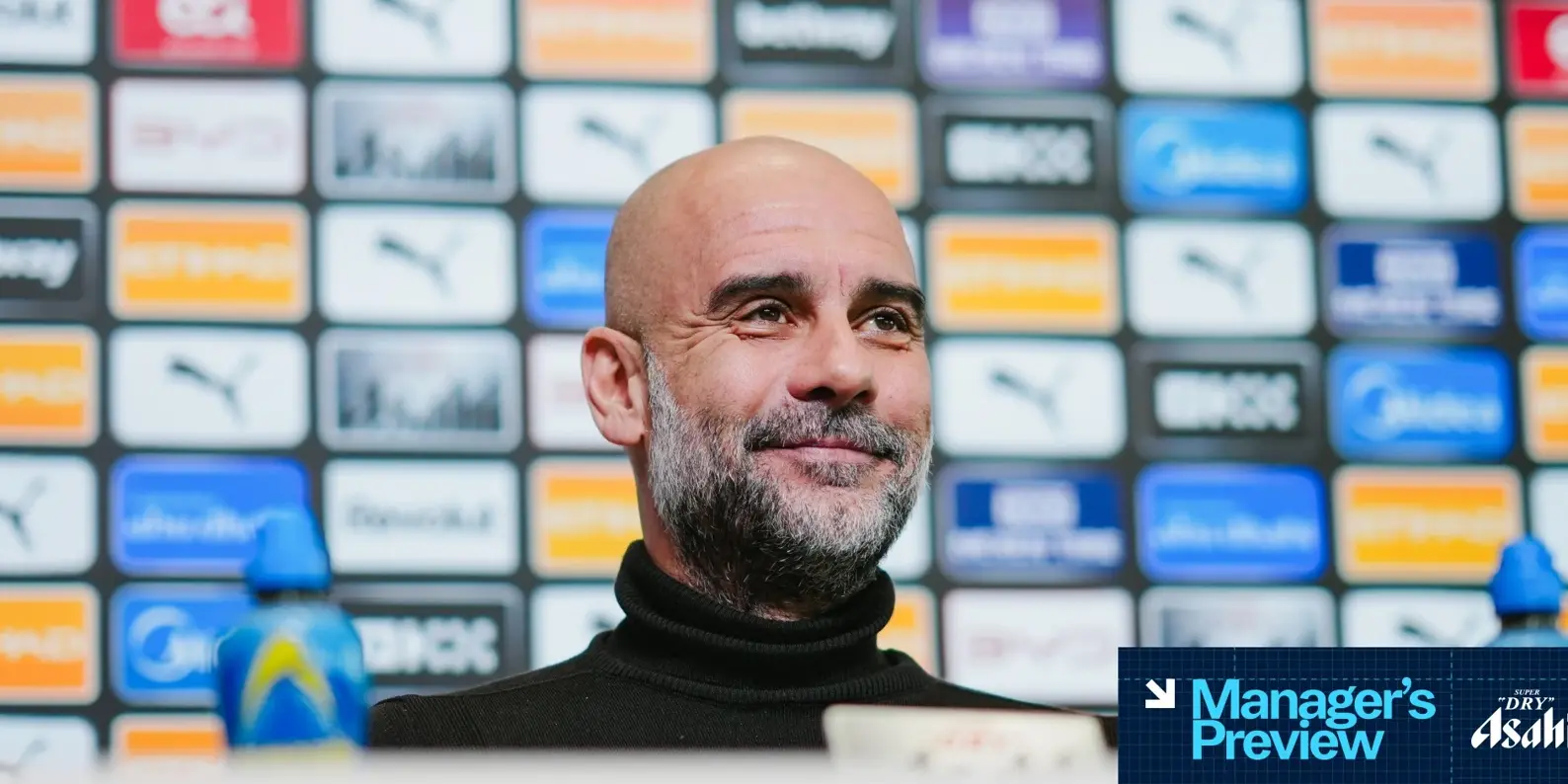
Everyone must understand that racial discrimination is an insult to others, and there must be no place for racism in football — whether against Black people or Asian people.Racial discrimination is a global problem. As Guardiola said in last week’s Premier League press conference: “I said last week that the colour of our skin does not make us better or worse. We still have a long way to go — not just in football, but society as a whole needs to progress. Racism is everywhere; it shows in how people behave, in whether you pretend to feel superior for some reason. How do we solve it? The answer is education. Money should be spent on teachers, not footballers. Teachers and doctors should be the most important people in society, not football managers.”
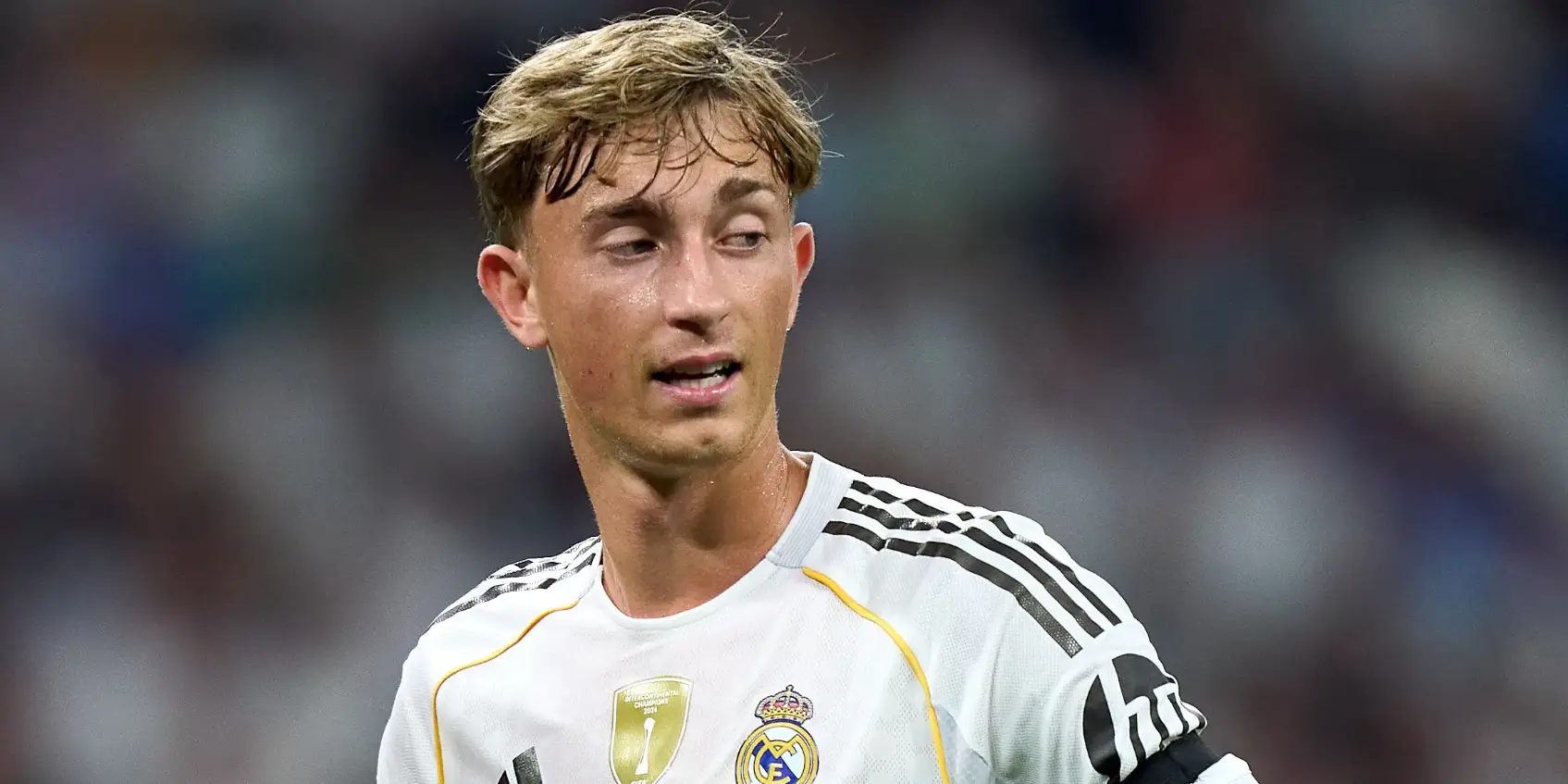
UEFA’s handling of the Vinícius case has also sparked controversy among Asian fans. Compared with the Vinícius incident, many are now calling for LaLiga and UEFA to investigate the Huijsen case.Spanish newspaper Mundo Deportivo supported this view in its follow-up coverage, stating that the Huijsen racism case had conclusive, visible evidence yet no punishment — unlike the Vinícius case.As many internet users have pointed out: “One set of rules for Real Madrid, another for everyone else.”
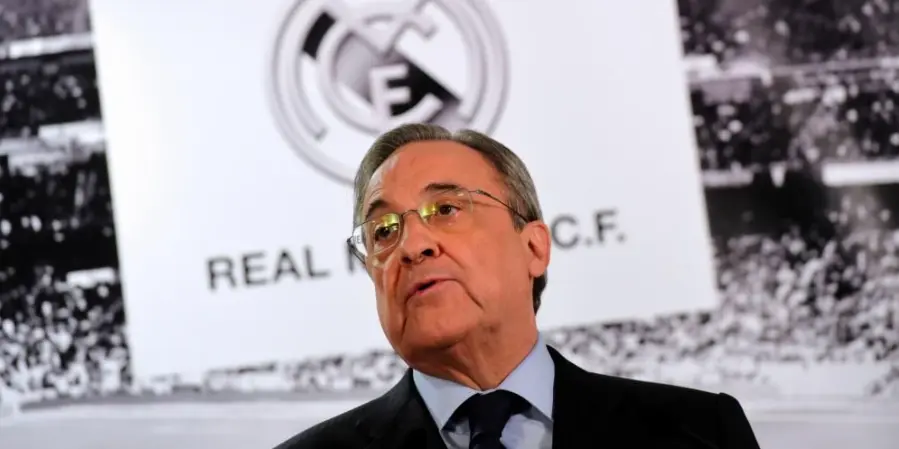
Meanwhile, Real Madrid’s contradictory attitude toward racism has put the club in an awkward position: on the one hand, it publicly supports Vinícius and opposes racism; on the other, it has had to address internal actions that contradict its stated position.This shows that, on racial discrimination, words alone are far from enough — only concrete action can be convincing.
All information cited in this article is from public media sources.