

Want to learn more timely sports news and live broadcasts & prevent losing our links? Welcome click here to join our Telegram channel
The thrilling match was breathtaking, with intense competition for every inch of the pitch throughout. Arsenal and Manchester City battled in this crucial Premier League title decider, showcasing the quality and charm of the "Best League in the World" to the world.
Facing City's three-dimensional attacking network combining flanks and center, Arsenal's defense endured immense pressure for long periods. When the forward players failed to apply sufficient pressure on the opponents, Mikel Arteta had no choice but to "overwork" Declan Rice to complete the transition between defense and attack. Cherki and Nico O'Reilly seized the opportunity to launch piercing attacks through the flanks, securing a highly valuable victory for the Citizens.
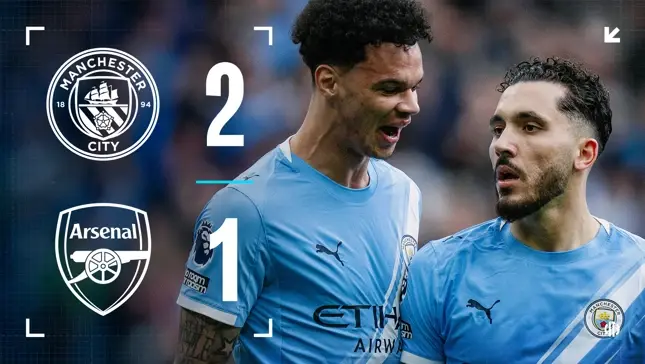
Manchester City Rested and Ready, Arsenal Stuck to Their Game Plan
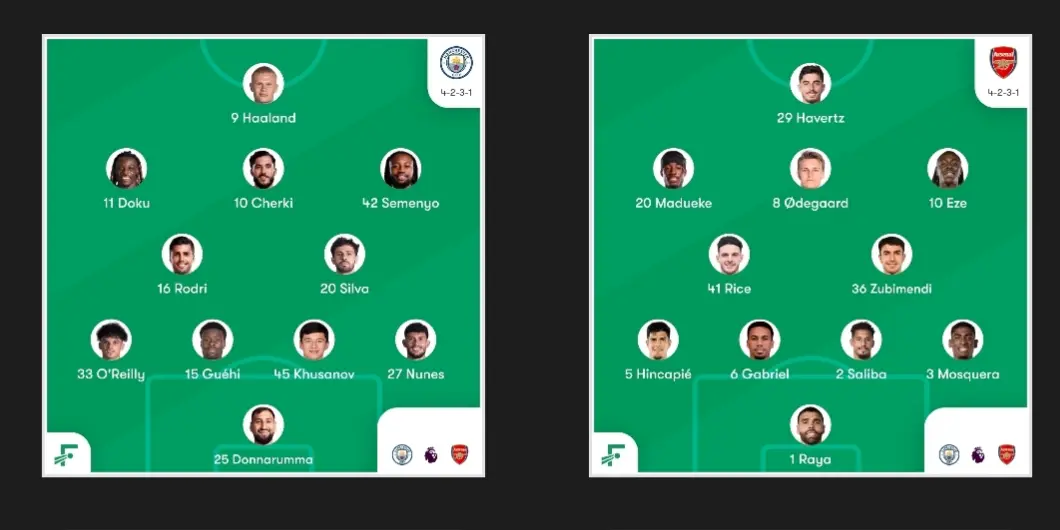
Around the international break, Manchester City faced strong opponents in three competitions consecutively. Against Arsenal, Liverpool, and Chelsea, the Citizens achieved three consecutive wins, scoring 9 goals without conceding any. This dominant performance brought immeasurable confidence. Pep Guardiola retained the same starting lineup that visited Stamford Bridge last weekend. With players like Cherki, Nico O'Reilly, and Khasanov finding their form, City's first-team squad has become very stable.
Several key players were injured, severely weakening Arsenal's squad depth. Competing on multiple fronts left the first-team players physically exhausted.
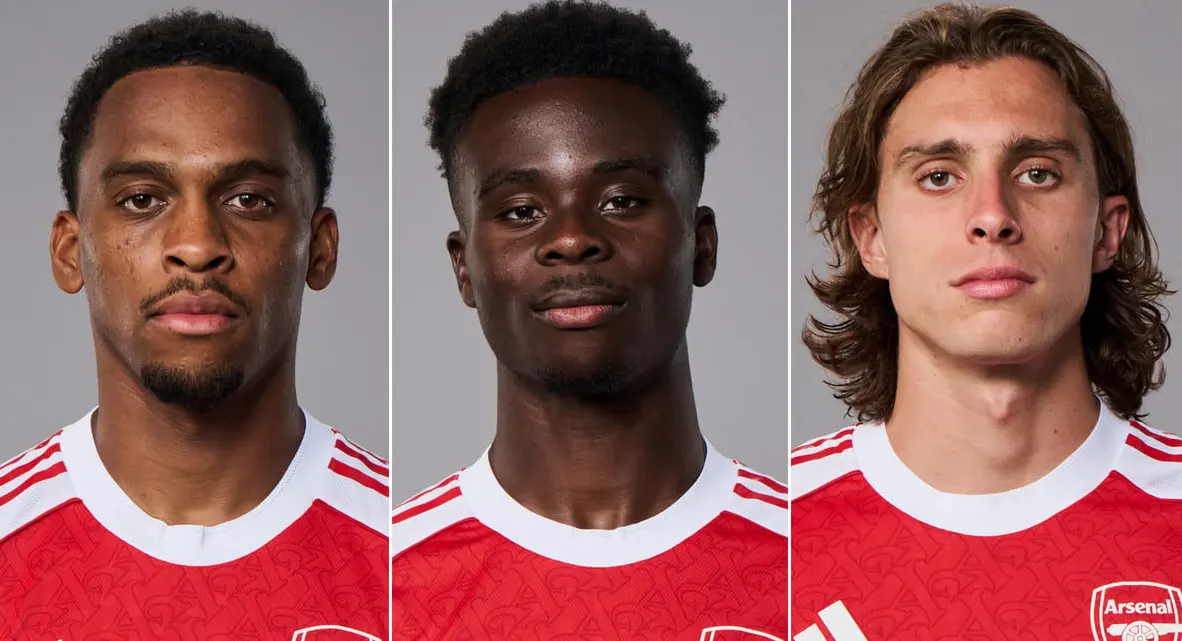
Compared to the match against Sporting CP at home three days earlier, Arteta made two changes to Arsenal's starting lineup. Viktor Gyökeres and Gabriel Martinelli were placed on the bench, while Kai Havertz joined Martin Odegaard and Eberechi Eze to form the midfield and attack. With Lorenzo Calafiori, Jurriën Timber, Bukayo Saka, and Martin Merino sidelined due to injuries, and Nørgaard failing to gain trust, Arteta had limited room for maneuver in team selection. Nine Arsenal players had to play consecutive matches in this game, laying the groundwork for their sustained passivity in the second half.
Havertz was preferred over Jorginho, and Odegaard started alongside Eze. Arteta deployed a de facto six-midfielder formation, which had limited counterattack capabilities when under pressure.
While Arsenal returned tired from the Champions League, Manchester City had fully prepared for this title-deciding six-pointer. There was a significant gap in physical fitness between the two teams. City, determined to close the points gap, would undoubtedly play aggressively. Arteta's choice to stack midfielders in the starting lineup was a sign of continuing to "conserve energy," which also explained why the game remained a half-pitch battle for long periods.
Martin Zubimendi and Declan Rice were besieged. Arsenal was at an absolute numerical disadvantage in midfield, and the forward line lacked speed and penetration. It was difficult for them to relieve the pressure through ground passes.
Passive Pressing Led to Goals, Flank Gaps Widened
Taking advantage of playing at home, Manchester City launched high-intensity pressing from the start. Guardiola instructed his players to focus on besieging Zubimendi and Rice, cutting off Arsenal's build-up play. Arteta's original plan was to organize a low block to compress space for City's attackers. However, less than 5 minutes into the game, Jeremy Doku repeatedly drew fouls from Miguel Mosquera, and Cherki 's shot in the penalty area missed the goal by just millimeters. This made the young manager realize that passive defense was too risky. Arsenal had to expand their defensive area outward to reduce pressure on David Raya.
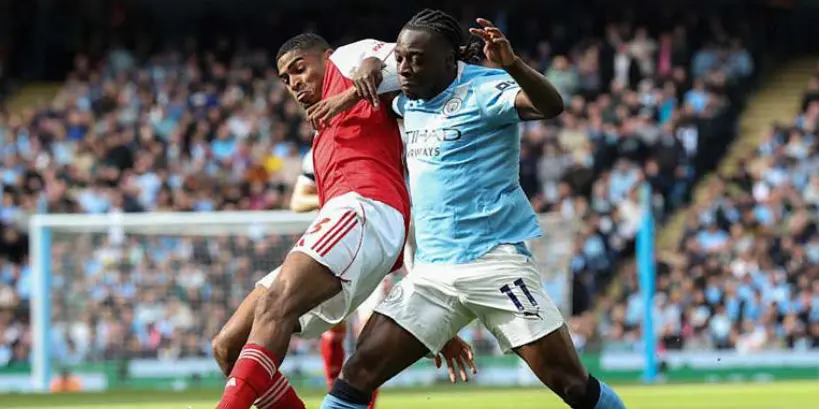
In the opening stages, Manchester City quickly launched high-intensity wing attacks, leaving Arsenal passive in low-block defense. Arteta recognized the danger.
Even after Merino's injury, Arteta still did not fully "activate" Nørgaard . Rice and Zubimendi were nearly exhausted from playing consecutive matches, meaning Arsenal's forward pressing could not be "ruthless pressing" but rather focused on blocking passing lanes through overall positioning. Of course, there was one exception - as the fittest player in Arsenal's starting lineup, it was no coincidence that Havertz scored after intercepting a pass from Gianluigi Donnarumma.
Arteta ordered his players to expand the defensive area to keep danger away from the penalty area. This decision changed the course of the game and led to the three goals that followed.
With ground passing channels blocked, Arsenal had to rely more on long balls to organize attacks. This resulted in numerous 50-50 balls in midfield, which favored Manchester City with their inverted full-back combination.Cherki's dazzling footwork was a joy to watch, and behind the Frenchman, Matheus Nunes and O'Reilly had built a solid defensive position.
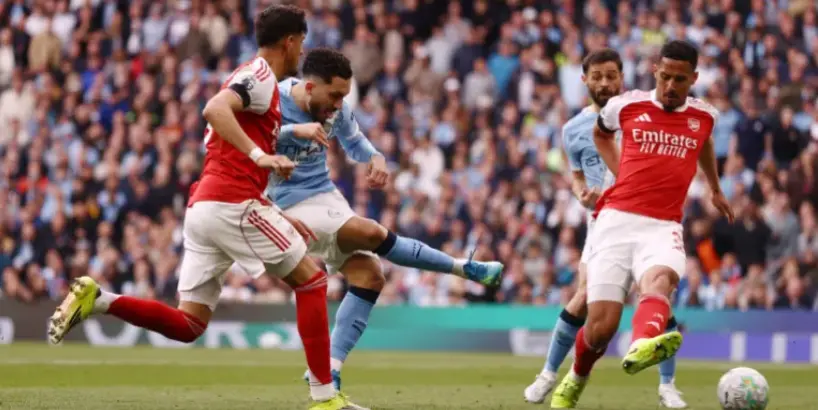
Taking advantage of the space left by Rice's forward runs, Manchester City cut through Arsenal's defense through the central flanks at least three times, scoring two goals.
With the addition of Semenyo, Manchester City's wing attacks became more balanced. Left-back Nico O'Reilly was given the opportunity to participate deeply in attacks. In the League Cup final, O'Reilly scored twice, not only delivering the best performance of his career but also shattering Arsenal's hopes of challenging for four trophies and dealing a heavy blow to their confidence. Four weeks later, in their rematch, O'Reilly did not join the top scorers' list. They relied on "goals from multiple players" when in control and set-piece goals to turn things around when struggling. Unfortunately, facing City's pressure in this game, Arsenal had very limited set-piece opportunities (5-8 corner kicks). Guardiola easily defused the set-piece defensive pressure with an extremely clever strategy.
Double Conservatism Proved Disastrous, Arsenal Had No Excuses for Defeat
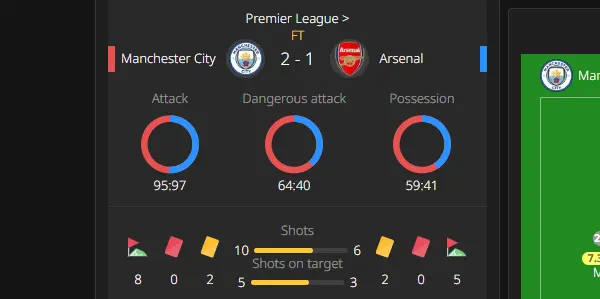
Arsenal maintained over 40% possession (41%-59%), were not far behind in shots (9-15), and even held advantages in scoring chances (5-5) and expected goals (1.53-1.41)... Despite having the best defense in the Premier League, they failed to win the game using their trademark counterattack style. This was partly because the team lacked an efficient goalscorer like Erling Haaland, leading to low chance conversion rates. On the other hand, Arteta's in-game management and team-building philosophy were both conservative, causing Arsenal to fall behind in the strategic battle.
Finishing as runners-up for three consecutive years, twice being overtaken by pursuers in the final stages, Arsenal has been honing themselves and accumulating experience through defeats. This season, with the most luxurious squad in the top five leagues and major competitors (Liverpool & Manchester City) experiencing inconsistent form, Arsenal could have opened up a significant gap like Liverpool did last year, but unfortunately, they failed to seize the opportunity.
However, since the Christmas-New Year schedule, Arsenal has encountered numerous problems. First, versatile midfielder Martin Merino suffered a season-ending injury, and then the players faced physical fitness issues. Arteta publicly declared the goal of challenging for four trophies, attempting to motivate the players, but it backfired. Playing fatigued led to frequent injuries, and the team's leading position in the league continued to shrink.
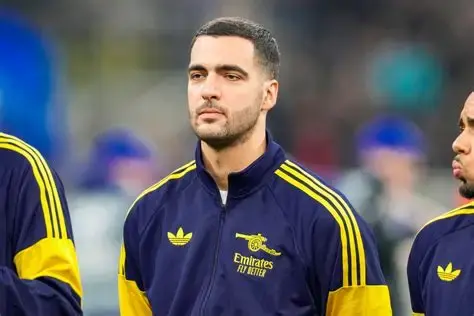
Merino's season-ending injury marked the beginning of an injury crisis. Arsenal's medical room was once crowded, and their points advantage quickly diminished.
During their "seven years, six titles" era, Manchester City claimed various points and goals records, creating a new dynasty after the Red Empire era. Guardiola and his players accumulated experience and confidence in a virtuous cycle, enabling them to make accurate judgments in complex situations. Spending heavily in three consecutive transfer windows, City invested nearly €600 million in 14 new signings. Their investment not only exceeded that of Arsenal and Liverpool but also followed a very sophisticated recruitment strategy.
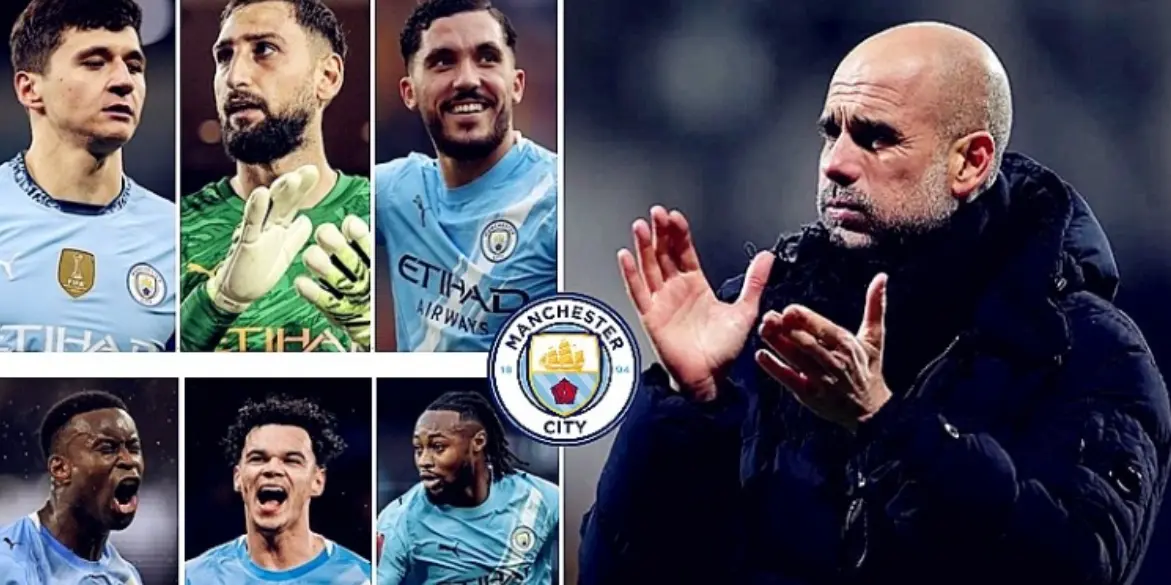
In the winter transfer window last season, City's new signings could form half a starting lineup, but they did not produce immediate results. Players from other European leagues struggled to adapt to the Premier League in a short time. In the past winter transfer window, City stopped signing from mainland European leagues and instead bought Ansu Fati and Gueye, who were familiar with the Premier League. Guardiola clearly sent a signal of "winning now," putting pressure on title rivals.
Arteta underestimated the impact of Merino's season-ending injury and hesitated to strengthen the squad in the winter transfer window. Meanwhile, City signed Fati and Gueye during the same period, reversing the title race momentum.
Arteta's tactical philosophy was relatively conservative, and he was equally indecisive in transfers. After Merino's injury, Arsenal did not strengthen the squad in the winter window. They abandoned their interest in Sandro Tonali at the last minute of the winter transfer period. This decision triggered a domino effect of injuries. As City played better and better while Arsenal stumbled due to injuries to several key players, the balance of power in this title-deciding match had already tilted.
Unable to overcome the mountain that is Manchester City, Arteta's strategic vision will not be recognized.
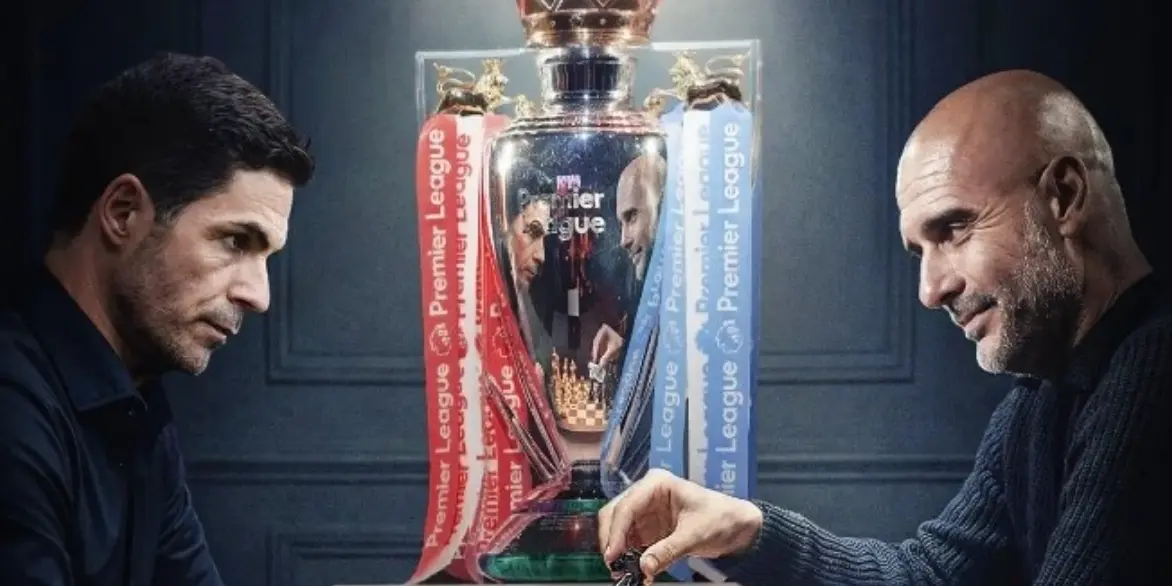
Arteta and his assistant coach have a long-term perspective. Many of Arsenal's tactical moves reflect the data-driven and rigorous approach of this era. Viewers accustomed to watching players improvise will need time to adapt. Arsène Wenger's innovations after arriving in the Premier League also sparked great controversy, and it took time for the outside world to realize their significance. Unfortunately, Arteta's team is sliding from "challenging for four trophies" to "winning nothing." It has become a major question whether the young manager will have the opportunity to complete his "digital football" revolution in the future.