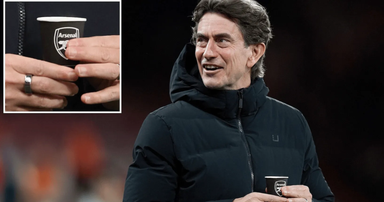


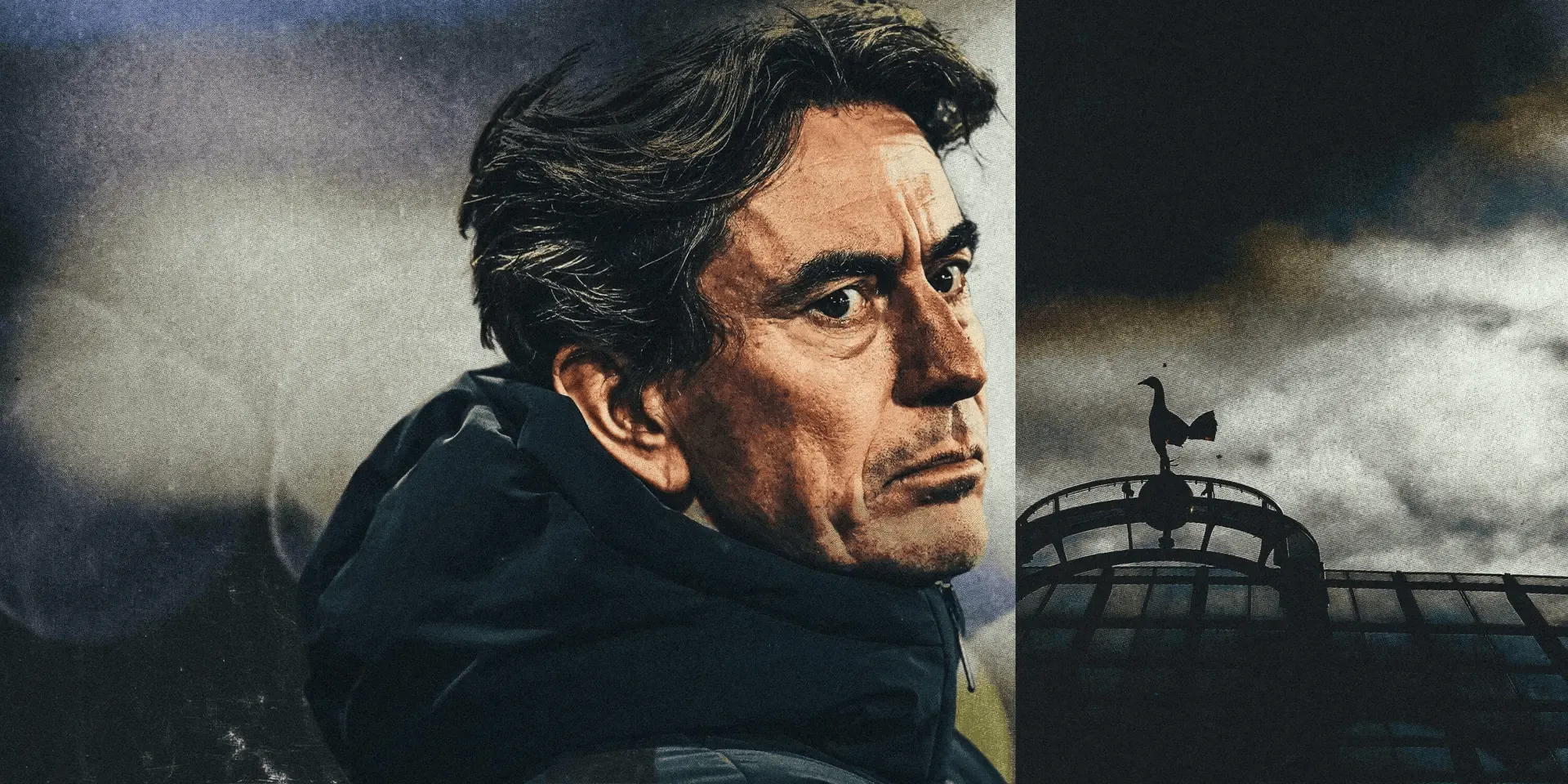
Thomas Frank has been sacked and is no longer the manager of Tottenham Hotspur.
After the defeat to Arsenal, the same question was raised both inside and outside the club: was the job too big for him? Could he make the step up from managing Brentford to Tottenham Hotspur?
Frank never managed to provide a satisfactory answer. Following consecutive losses to Arsenal and Fulham in November, then-Tottenham sporting director Fabio Paratici concluded that Frank was not the right fit for the job.
After a 3-0 thrashing by Nottingham Forest in December, Paratici held talks with Fiorentina, and combined with personal issues, it led to his swift departure from his new role.
Even on the few good days of Frank’s tenure – the away wins based on counter-attacking football – Tottenham still played passive, minimalistic football that clashed with the club’s identity. On January 1st, a 0-0 draw away at Brentford saw the away fans chant “Boring, boring Tottenham”, marking the beginning of the end for Frank.
Many players also disliked the limitations of Frank’s tactics. A source close to senior first-team players, speaking on condition of anonymity to protect relationships, revealed shortly before Frank’s sacking that the manager made it feel like he was coaching a “weaker side”, focused on compact defensive shape, long balls and counter-attacks.
This meant Frank failed to get the best out of his players, with the source claiming the squad was only operating at “10 per cent” of their ability due to tactical restrictions.
Frank told those close to him that the second half of the season would be “very difficult”, and that despite Tottenham’s excellent facilities, the overall quality of the squad was lacking. The same was true of the left-wing position, where he tried various players but none truly stood out.
While Tottenham’s recruitment department must take some blame for assembling a disjointed squad, Frank never settled on a starting line-up, and his constant rotations disrupted the team’s momentum.
There is a simple truth in football: managing a top club is nothing like managing a smaller one. Many fine managers – even great ones – have struggled to make the step up. Think Roy Hodgson from Fulham to Liverpool in 2010, David Moyes from Everton to Manchester United in 2013, and Nuno Espírito Santo from Wolves to Tottenham in 2021.
Like Hodgson, Moyes and Nuno before him, Frank struggled to convince anyone he was capable of managing a club of Tottenham’s size and expectation. He was a thoughtful, intelligent figure in public, popular with staff and keen to learn everyone’s name.
But he was widely seen as too nice, perhaps lacking the edge or charisma needed to lead such a big club. The image of Micky van de Ven and Djed Spence walking straight past him when he told them to go to the fans only reinforced this perception.
Another Tottenham player believes that while Postecoglou may not have been the best coach, the players respected him, appreciated his charisma and bought into his ideas. However, the players quickly stopped buying into Frank’s instructions, as in the player’s view, he lacked the personality required to manage a top club.
A long-serving source at the training ground agreed, stating that whatever Postecoglou’s flaws, the players would ultimately run through brick walls for him, as proven by their Europa League triumph. The players never held the same respect for Frank, and knew they did not have to work as hard in training for him. In the source’s view, this meant they never put in the same level of effort as they had under the previous manager, knowing they could get away with slacking.
It is undeniable that Frank faced serious off-field issues with player behaviour and squad morale that he could not fix. Discipline and punctuality were constant problems. After Tottenham’s heavy defeat to Arsenal, Frank tore into the players in the dressing room and warned them not to drop their standards. The next day, several players including Cristian Romero were still late. The club has denied this claim.
The example of Romero is telling. He was the only viable captaincy candidate following Son Heung-min’s departure, but his behaviour on and off the pitch did not always match what was expected of a skipper. Frank publicly backed Romero throughout, even after he criticised the club’s hierarchy and then received a four-match ban for a foul on Manchester United’s Casemiro days later. But privately, he had reservations about the defender’s leadership.
This partly explains why the club realised all season they had a major leadership void. Sources close to the players repeatedly cited a lack of direction on the training pitch. Or that after defeats, the players were too downbeat, with no one able to lift them and refocus them on the next game. This left the squad low on morale for Frank’s final two months, with no one able to turn it around. It also explains why the club signed Conor Gallagher and pursued Andy Robertson in last month’s transfer window – they were desperate to fill the character void in the squad.
It is also impossible to ignore that Frank faced an injury crisis as severe as the one that derailed Tottenham’s league campaign last year. James Maddison and Dejan Kulusevski – their two best midfielders – did not play a single minute of competitive football under him. Their best striker Dominic Solanke did not start a game until late January. Most of the rest of the squad also suffered serious injuries. Rodrigo Bentancur, Kevin Danso, Pedro Porro, Richarlison, Lucas Bergvall and Mohammed Kudus were all absent during Frank’s final weeks. Wilson Odobert tore his anterior cruciate ligament in his left knee in Frank’s last match in charge.
Even at full strength, this squad is not a top-quality one. Without those players, they were never going to challenge for titles this season.