

Recently, Luis Campos, Sporting Director of Paris Saint-Germain, gave an exclusive media interview where he talked about his scouting work, how he discovered a superstar like Kylian Mbappé and many other football-related topics.
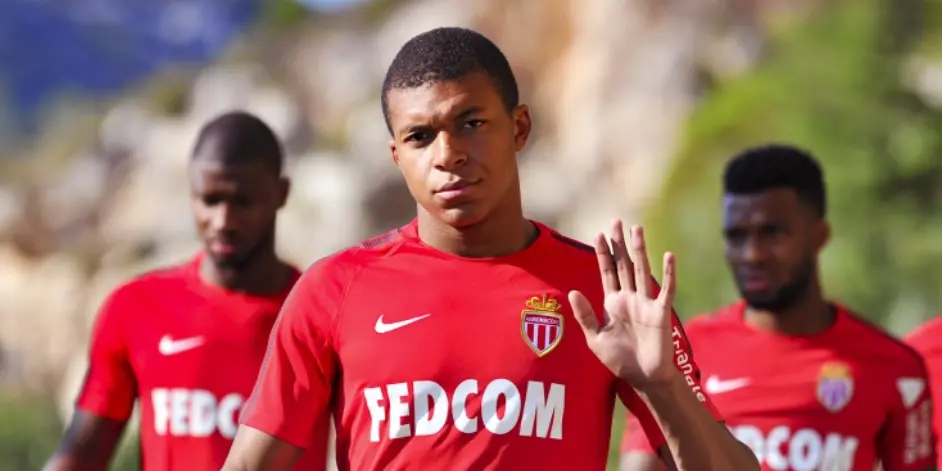
Q: Let’s continue talking about your experience at Monaco. Back then, a 15-year-old boy named Mbappé emerged. It’s said that an incident once happened where a coach doubted his ability, and you had to intervene personally.
A: This happened right when I first arrived at Monaco. I’d heard there was an extremely talented kid, but I hadn’t actually watched him play yet. Mbappé’s start at Monaco was not easy, and he had a conflict with the coach. People on my team kept telling me how good Mbappé was, so I told the coach to put him on in the next game. Twenty minutes later, Monaco was leading 3-0, and Mbappé scored all three goals. I said then: “That’s it, he has to stay, because there’s something truly special here.”
Shortly after, following his first training session with the first team, João Moutinho – then a key player for the Portugal national team – came to me with Bernardo Silva and Ricardo Carvalho, saying: "Hey Luis, this kid can’t leave here. Who is he?" Mbappé earned his place through his own ability, character and strong will to become a great player in football, not because we gave him a push. He firmly established himself naturally after overcoming countless difficulties.
Q: In scouting work, is the most important thing to discover talent and predict a player’s development, or to judge in advance whether he can integrate into a team?
A: Everything matters, especially when it comes to players costing tens of millions of euros. We can’t afford to make mistakes. Therefore, the whole process is like an investigation, initially almost detective work, to learn everything possible about the player.
The hardest part of scouting is "prediction". It’s not difficult to watch a player’s games and master all the data, because new technologies now help us understand players to a great extent. The real key is: can he integrate into the football system required by our head coach? In other words, how can he help the team? How to predict how he will perform in our tactical system? Very often, we see a player doing one thing on the pitch now, but our coach may ask him to do something completely different in the future. Judging whether he has the ability to meet these requirements is the hardest part.
I used to be a coach, which helps me a lot because I can understand both our head coach and the coach of the team the player currently plays for.
Q: In 2013, Monaco under Dmitry Rybolovlev invited you to build a brand new sports project: to establish a modern club in a team that had just been promoted to Ligue 1, and implant your working methods.
A: That was the first time I really came into contact with something that would become extremely important later – the Financial Fair Play. Back then, Monaco had just signed James Rodríguez, Radamel Falcao, João Moutinho... investing a lot of money. We had to perfect the squad with other players without going bankrupt, which forced us to be very creative. It wasn’t easy; the first and second years of a new project are never easy, because you have to change the inherent way of thinking. At first in France, they called me a "deal-maker director" because they struggled to understand this model.
When I signed Anthony Martial for 5 million euros and sold him for 80 million euros a year later, many people asked me: "Why sell our best player?" But I used this money to buy better players the next year, reinvesting the funds to make the team stronger without violating the Financial Fair Play rules.
At that time, Monaco was also fined 50 million euros for tax evasion, which had a huge impact on us, but it also forced me to be more creative to find players like Fabinho from Real Madrid, or to boldly promote young talents from our own youth academy, such as Mbappé; I also signed the highly talented Thomas Lemar for 3 million euros, or brought in Bernardo Silva, who had almost no playing time at Benfica back then.
This forced us to look for high-quality young players, as well as outstanding coaches who were highly compatible with the project. Because good scouting is not just about finding the best players. As a sporting director, I also did a good job in finding the right top coaches for these projects, such as Leonardo Jardim at Monaco.
And my most successful "scouting" in the past two years was finding Luis Enrique for Paris Saint-Germain. It gives me great satisfaction to find the most suitable head coach for the right club at the right time.
Q: In football, it’s extremely difficult to gain huge appreciation from player transfers while maintaining competitive performance, balancing economic and sporting results. You did this at both Monaco and Lille.
A: I’ve also done it at Paris Saint-Germain, just in a different way. These are three completely different projects. The models at Monaco and Lille are very similar: we had to create transfer premiums – the more we sold, the stronger the team became, because it allowed us to enter the transfer market the next year to reinforce the squad again and get better.
At Paris Saint-Germain, the situation is different. We have some top players with extremely high salaries, and the club faced a very difficult situation under the framework of Financial Fair Play. Today’s PSG has a very healthy financial situation, with the total wage bill dropping sharply, and at the same time our competitiveness is even stronger, because we have also changed the entire football philosophy and way of thinking in Paris and within the club.