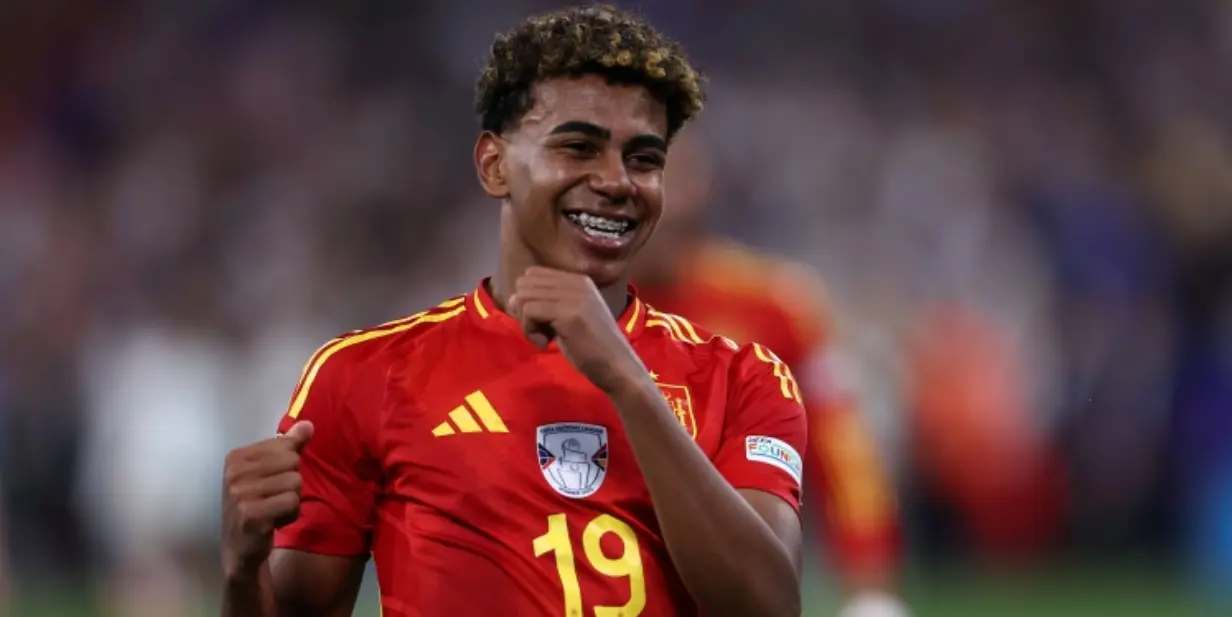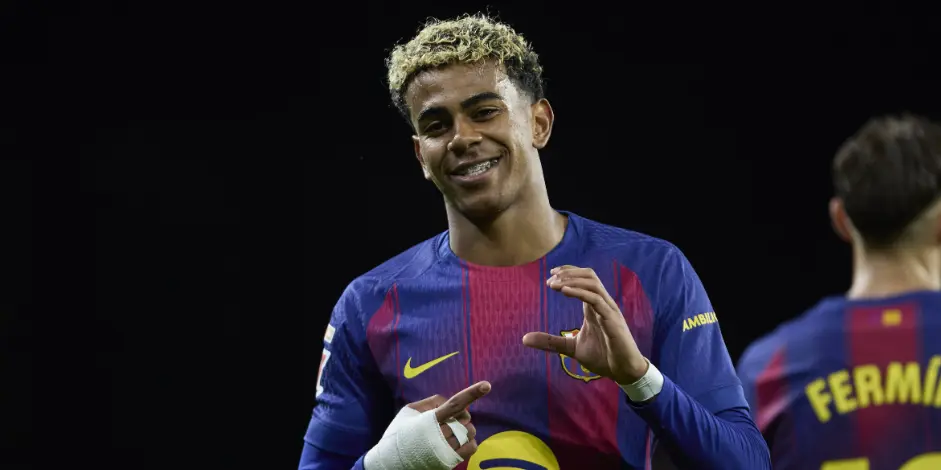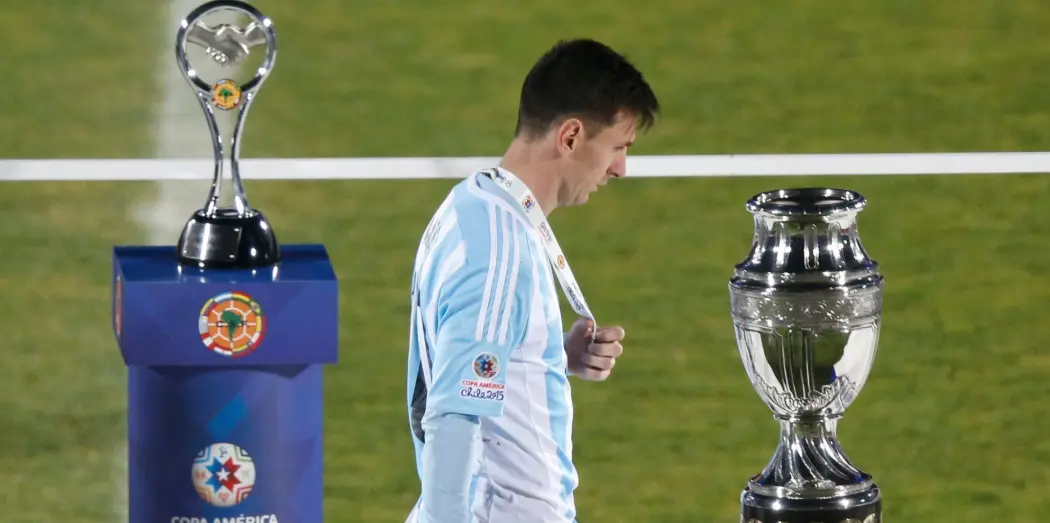


Recently, Messi appeared on the podcast for an exclusive interview, talking about his personality, early career memories, Maradona and many other topics. Below is a summary of Messi’s interview by Camel.
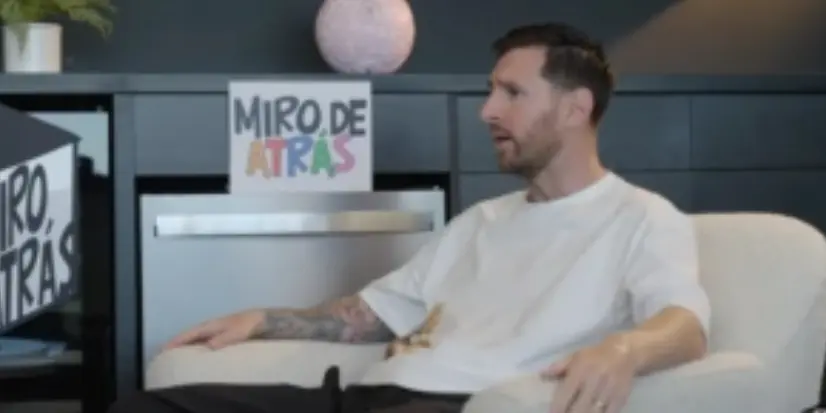
On his personality
Messi: “Sometimes I’m scared of talking too much. It’s different if you trust someone. But looking back later, I think: ‘Why the hell did I say all that?’ For a while I started to relax more, be more willing to show myself, and not close myself off so much. Now I’m more at peace and a bit more open. A lot of the time people make up all kinds of things about me, but I’m just a normal person: I like the small things, the details, what’s mine. I live the same life as everyone else.”
On Omar
Messi: “I kept my distance from everything back then, and my father helped me get in touch with him. You could say he was the one who found me (laughs). He said he took the phone book, started calling everyone with the last name Messi, one by one, until he reached one of my relatives, who then told my father, and that’s how it all started. Thanks to Omar, I was able to join the national team.”
On his start in Spain
Messi: “The Spanish U17 team had Fabregas at the time, who played with me. Funnily enough, he scored in the final… Hugo Tocalli once said he asked why I wasn’t in the squad. It’s true, Omar was one of the key people — we were calling him non-stop. Later on I would ask Saviola and other Argentine players at Barcelona more. He cared for all the kids in a special way, always by our side, and he got so excited whenever any of us made it to the senior team. Reuniting with him was like going back to the beginning. I love him very much. Later our relationship grew even stronger. I love him dearly.”
On choosing Argentina
Messi: “Spain did signal their interest at one point. I was playing for Barcelona, and they hinted at it semi-publicly. It’s normal — lots of kids that age go through that. Even though I’m Argentine, I moved there very young and spent most of my youth career in Spain, so technically I could have played for them. But my heart was always with Argentina.”
On Newell’s Old Boys
Messi: “I was very young when I left. I had friends and school, but I left happy and full of expectation. I really wanted to go to Barcelona and experience life there. What I remember most is my brothers — they all had their own friends, and it was a huge send-off. We left on a truck, and the whole street was there to see us off. There were lots of people at the airport too. It was incredible. There weren’t as many cameras back then, but it was like something out of a movie. They were saying goodbye to neighbors, not to ‘Messi’ — to a family that had lived there their whole lives.”
On his first return to Rosario
Messi: “I remember we left in September and came back for the holidays. Then we went back again in June or July for the break. I was lucky to travel back and forth often. The first year was tough because I couldn’t play for six months, no transfer papers, just paperwork issues. After the paperwork went through, I injured my tibia in the first game and had to sit out. Time went by slowly because I barely played. Once I started playing at 14, everything went fast. The next year I moved up a level, and everything developed really quickly.”
On the video of the little boy at Newell’s Old Boys stadium
Messi: “Yes, that was me. I think it was the match when Diego (Maradona) came, but I don’t remember exactly. A presentation, where the champions paraded around the pitch, and they called me onto the field. I was too young to remember clearly, but it could have been the day Diego came.”
First conversation with Maradona
Messi: “The first time I met him was when he invited me onto his show. It was after I came back from the 2005 U20 World Cup in the Netherlands. I remember it was an international break before 2006, when we played Peru. He showed up in the dressing room with my whole family. I don’t remember who I played table football with, maybe Tevez. We beat Diego for the first time. Later he asked for a rematch, partnered with Crespo, and beat us. I didn’t speak to him directly back then; it was all the producers communicating.”
Where do you rank Maradona, and where do you rank yourself?
Messi: “Anywhere is fine. Diego was a legendary madman.”
More on Maradona
Messi: “Diego transcends generations. You grow up watching his videos. I saw him at Newell’s Old Boys, but I was little then. I’ll never forget the day of his debut and his goal. We were too young for the 1990 World Cup, and we didn’t watch much of the 1994 one with all that happened. But Diego is above everything.”
On Argentina vs Mexico at the 2022 World Cup
Messi: “I’ve said it, the game against Mexico was crucial, one of our toughest. We talked about it in the dressing room: we had so much on the line in that match, but we had to look back at everything we’d done. We hadn’t lost in a long time, and the Saudi Arabia game couldn’t change who we were. We had to find ourselves again. Mentally there’s a subconscious shift: you know you’ve been winning non-stop, but one loss and you’re out. That free kick — Emi Martínez would have caught it easily… If that had gone in, everything would have got really complicated.”
What do opponents say to you on the pitch?
Messi: “During games people ask me for my shirt. I usually swap with Argentines or former teammates who I later play against. Argentines first, if not, whoever asks first. I’m not fussy, I don’t pick and choose. There have been times I promised a swap but didn’t do it because I was angry after losing. About the scoreline and what to do when you’re ahead? Guardiola told us the best way to respect opponents is to play seriously, treat everyone the same, score when you can. We’ve always tried to do that.”
On his reactions on the pitch
Messi: “Nobody’s perfect. You get angry, you react… there are a million situations. But for me, everything that happens on the pitch stays on the pitch. I’ve thought that way since I was little: what happens in the dressing room stays in the dressing room. I find it strange that people now make public what happens on the pitch, conversations with others. I know times have changed, social media has so much influence now. Does it get tiring having to watch what you say? Yes, but you can’t think that much when you’re on the pitch. You have to be natural, focus on playing. But afterwards, when I see things I don’t like, it does upset me.”