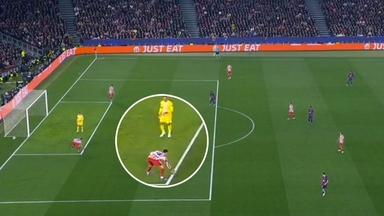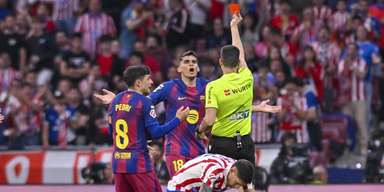


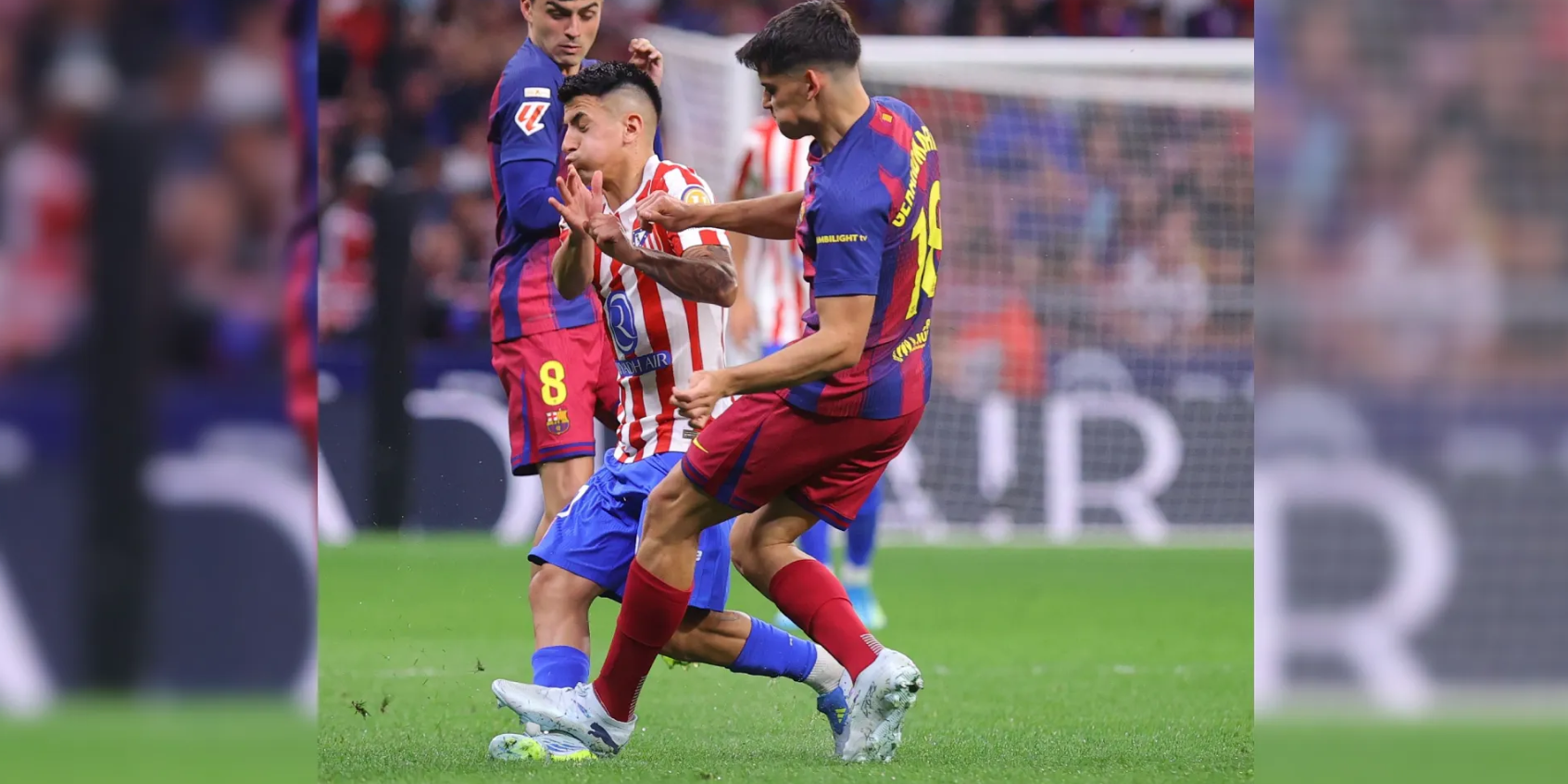
Last Saturday night, during the La Liga Matchday 30 game between Barcelona and Atlético Madrid, Gerard Martin stamped his studs on Thiago Almada’s ankle in a challenge and was sent off with a straight red card. But the decision was overturned by VAR. The VAR and the on-field referee eventually withdrew the red card for the Barcelona player, only showing him a yellow card after checking the replays.
After the match, Atlético Madrid’s official social media accounts and Diego Simeone in his post-match interview both voiced their disagreement with the decision.
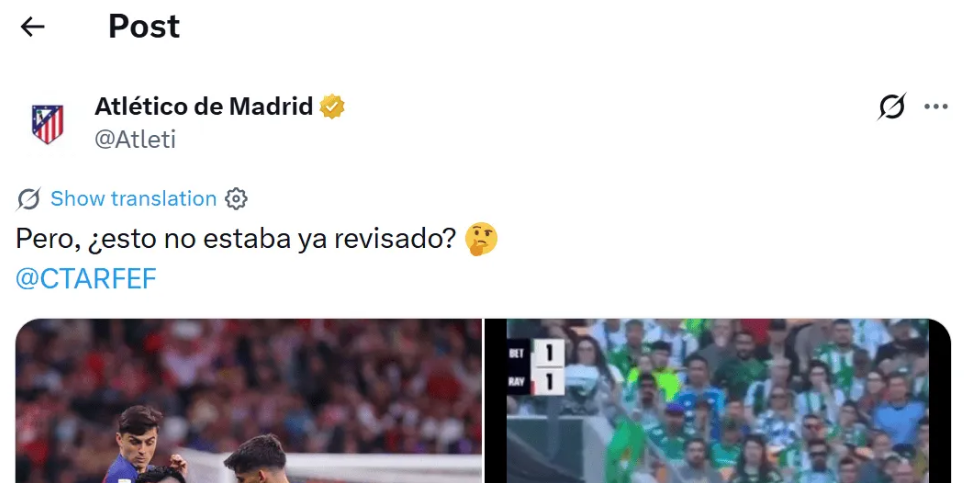
That evening, the official account of the Madrid club also criticized the league's refereeing, posting a photo of Gerard Martin's foul and an explanatory video from the Technical Committee of Referees (CTA) regarding a similar foul during Betis vs Rayo Vallecano last February.While the match referee did not award a penalty, the CTA stated that a red card should have been shown to the offending player."Hadn't this already been reviewed?" Atlético Madrid wrote on X, questioning the Committee to highlight the inconsistency in overturning Gerard Martin's red card weeks later for an identical foul.
At the press conference, Diego Simeone also referenced the similar incident."There's not much to say, the action is clear. He arrives late, steps on his foot, his entire ankle, but well, we can only hope the CTA reviews it properly so that if it happens again next week, whether it goes in our favour or not, the situation is clear," the Argentine explained.
But today, the Royal Spanish Football Federation (RFEF) has acknowledged the refereeing mistake.
The Royal Spanish Football Federation (RFEF) published the referee decision review for the last round of La Liga, acknowledging that Barcelona defender Gerard Martín should have been sent off with a red card during the match against Atlético Madrid.
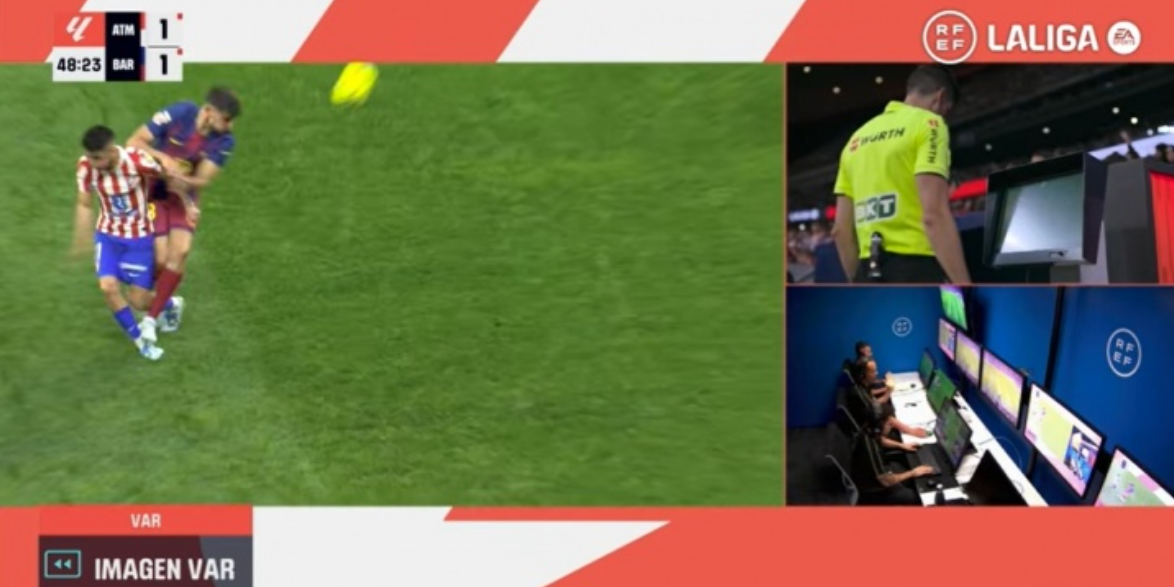
Incident 1: Atlético Madrid vs Barcelona
Two players were contesting a 50-50 ball, which was clearly within reach of both. The Barcelona player touched the ball first, but in the subsequent movement, his studs stamped on the outer side of the opponent’s lower leg, just above the ankle, causing an ankle sprain.
The referee on the field, considering the intensity of the action, the point of contact, and the consequences, directly showed a red card for serious foul play. Later, VAR suggested a review, and the referee changed the decision to a yellow card.
The key to distinguishing such scenarios lies in: whether the ball is in a state of confrontation where both parties have an actual chance to contest; or whether one party has already gained possession, completed a shot/pass, and the other invades their action space causing contact.
When both parties have a chance to contest the ball, the player who touches it first gains priority but remains responsible for the consequences of subsequent actions. In other words, touching the ball first ≠ exemption from subsequent reckless, careless, or serious foul play. The Atlético vs Barcelona case, as well as the Real Betis vs Rayo Vallecano case analyzed in Issue 22, both fall into this category. The Referee Technical Committee (CTA) determined both were serious foul plays, and touching the ball first does not affect the classification.
When one party has gained possession and completed the technical action, the possessor has obtained priority and finished the kicking motion, while the opponent extends their leg into their action space. At this point, the latter should take care to avoid and protect their own safety; the possessor is not liable for the consequences of contact. Cases like Valencia vs Celta Vigo, a previous Liga I match in Romania, and Huesca vs Mirandés all fall into this category. According to Circular No. 3 of the Referee Technical Committee this season, such contact is unavoidable and unintentional, an accident, and should not be punished.
Of course, if the possessor makes an additional deliberate movement to seek physical contact after kicking the ball, it is a different matter and should be punished according to the nature of the action.
Final Conclusions on the Two Cases
Based on the consistent and coherent refereeing standards of the Referee Technical Committee this season and national/international referee bodies:
For the Atlético Madrid vs Barcelona match: The ball was clearly in a contested state by both parties. The referee’s initial red card decision was correct, and VAR should not have intervened. The VAR review suggestion led to an incorrect decision reversal; the referee should have stuck to the original judgment.