



Camel Live has compiled the transfer spending of all 20 Premier League clubs this season, with the total exceeding £3.5 billion. A club-by-club breakdown has been made, with expenditure split into four age groups: under 21, 21–24, 25–28, and 29 and over.
Overall, the league-wide trend has continued. As detailed in the final transfer report of the season released last week, 49% of spending has gone to players aged 21–24, marking the eighth consecutive season that this age group has accounted for the largest share of transfer outlay.
A club-by-club analysis offers deeper insight.
Take current Premier League leaders Arsenal, for instance.
Mikel Arteta’s side has been built through heavy transfer investment over recent years, and the 2025–26 season is no exception. They have spent over £250 million on new signings this season while generating little income from player sales, making them the highest net spenders in English football.
Notably, however, the age profile of players arriving at the Emirates last summer has shifted significantly.
If Arsenal’s age breakdown reflects their short-term goals, the picture is different for other London clubs.
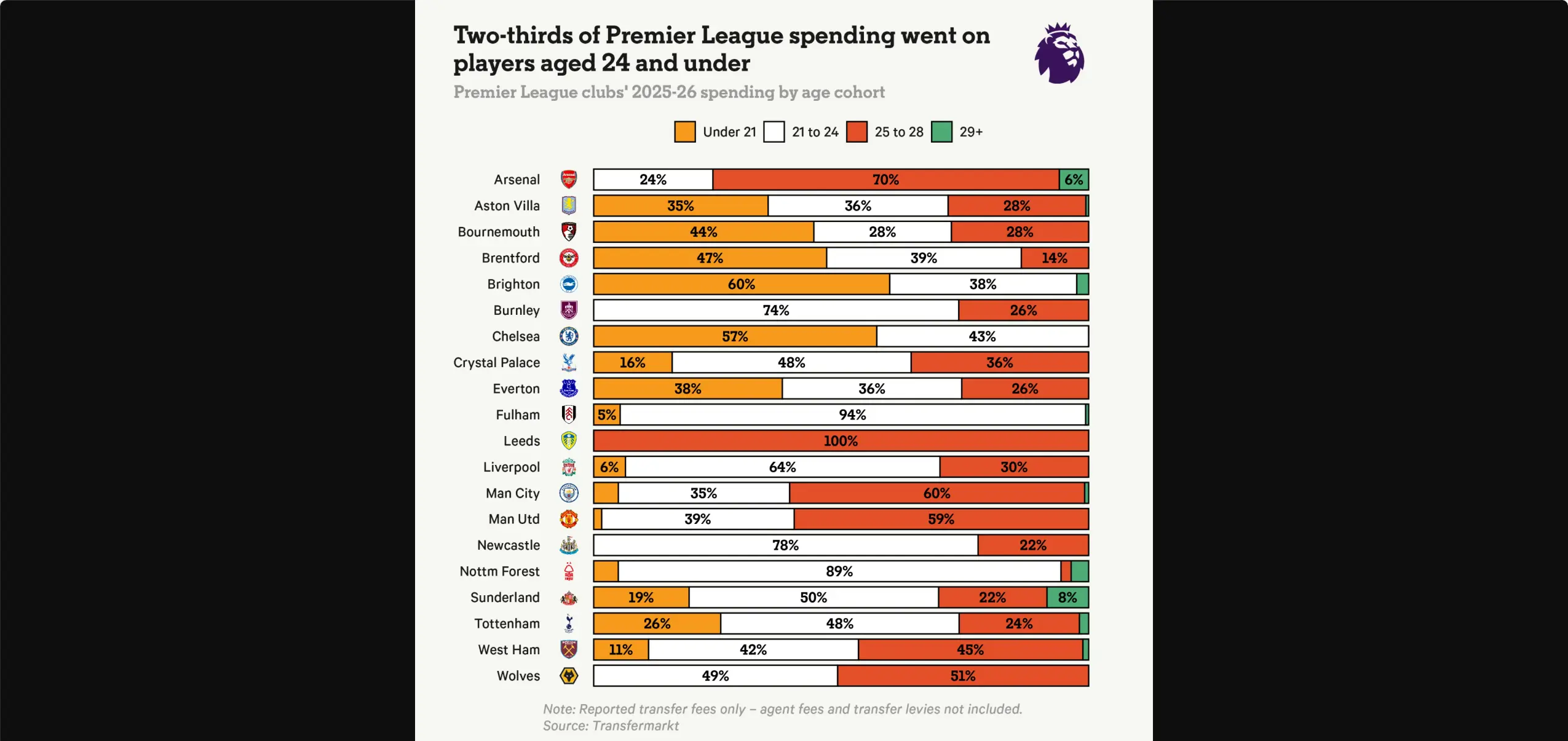
Chelsea’s transfer spending this season stands at nearly £300 million, a figure less eye-catching than their recent big-money splurges because they recouped most of the cost via player sales.
Even so, where that money has gone reflects their overall strategy. Their budget has been focused heavily on young players: Chelsea have spent nearly £170 million on players under 21 – a huge sum – including Karim Gittens, Estevão, and Maxi Hato.
That is nearly £100 million more than the second-highest spender on youngsters (Bournemouth: around £70 million on Rayan, Doak, Milosavljević, and Totte).
Chelsea operate with massive operating losses – over £200 million in each of the last three reported seasons (their 2024–25 financials are yet to be published) – making high-profit player trading essential. Buying young players helps improve their financial position.
Interestingly, the only other club to spend more on under-21 players in 2025–26 is Brighton, a side Chelsea have regularly signed players from in recent years.
Brighton’s outlay this time is only a third of their club-record £210 million spend in 2024–25, but well over half of that funding has gone on two teenage signings – Kostoulas and Watson. Efficient player trading is critical for Brighton.
Also striking is the vastly different transfer strategy of this year’s three promoted clubs.
Sunderland, who returned to the Premier League with a youth-focused model, are now the most active in signing players aged 29 and over, both in terms of percentage of club spending and total amount. That marks a sharp contrast to their approach after eight years in the Championship and League One.
Much of Sunderland’s veteran budget has gone to Granit Xhaka, who has been vital in keeping the club clear of the relegation zone. Sunderland have not abandoned their youth-first philosophy, spending over £100 million on players aged 24 and under, but have also benefited greatly from bringing in experienced players.
The same could be said for Leeds United. Surprisingly, last season’s Championship winners invested their entire summer transfer budget on players in their prime. Focusing all transfer resources on players aged 25–28 means their targets can walk straight into the first team.
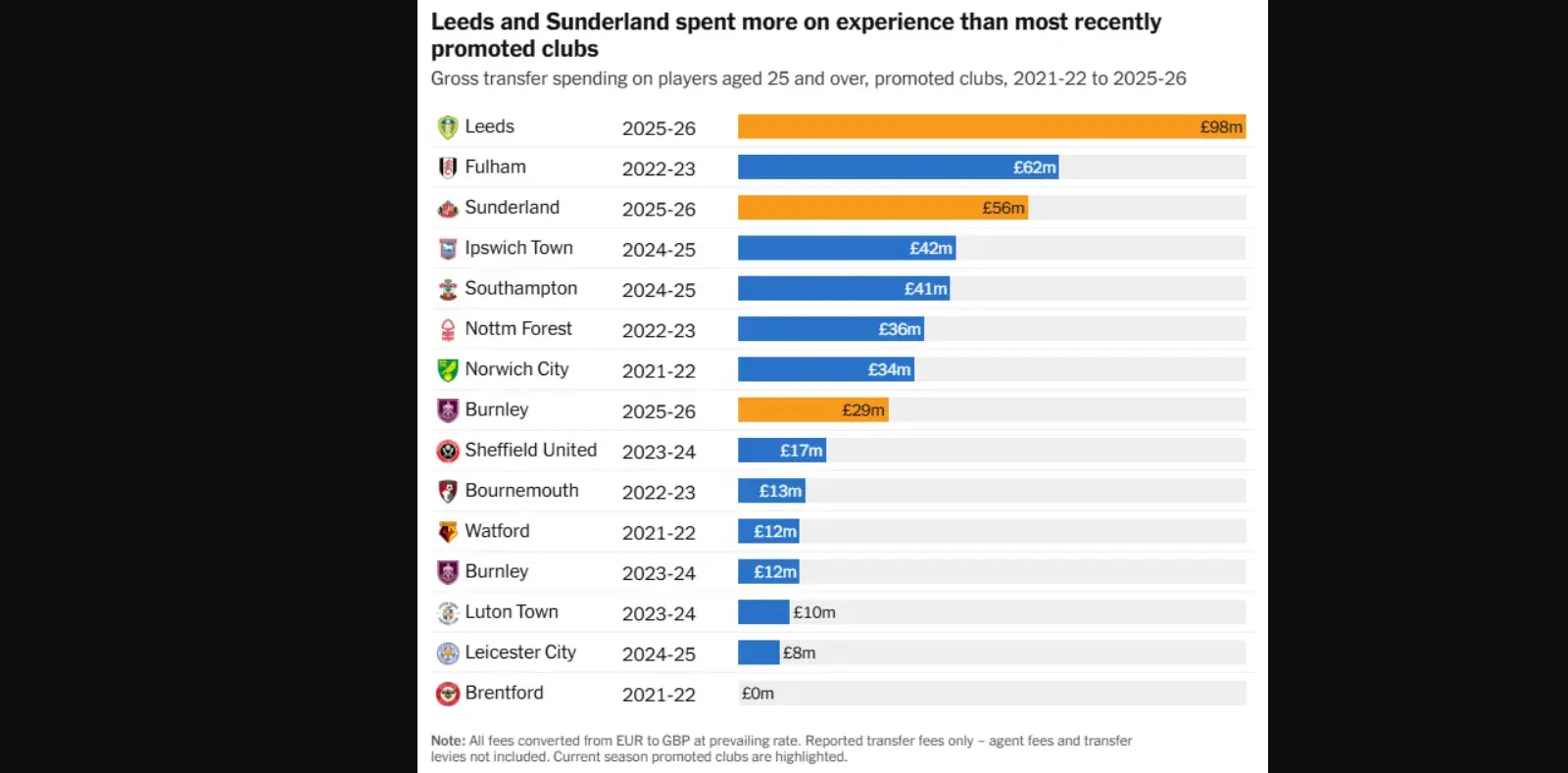
Daniel Farke’s side sit six points clear of the relegation zone after 25 games – far from safe, but much better than many promoted sides in recent years.
Burnley’s story is completely different. Despite heavy spending in their second summer back in the top flight in three years, they sit bottom of the table, 11 points adrift of 17th place. Their £100 million transfer fee has all gone on players aged 26 and under, with three-quarters spent on players in their early 20s.
The two Manchester clubs follow a similar pattern, committing around 60% of their transfer budget to players aged 25–28.
City’s signings of Antoine Semenyo and Marc Guehi last month reflect a trend over the past decade – no other Premier League club has spent more on players in their prime.
At Manchester United, the arrivals of Bryan Mbeumo and Matheus Cunha follow their neighbours’ blueprint: they have poached top-tier players from other Premier League sides, all in their peak years.
As for Liverpool, despite the arrival of Jakke potentially suggesting otherwise, heavy spending is not expected to become the norm. Judging by the new signings brought in by head coach Arne Slot, Liverpool’s squad is getting younger, with 70% of transfer fees spent on players under 25.