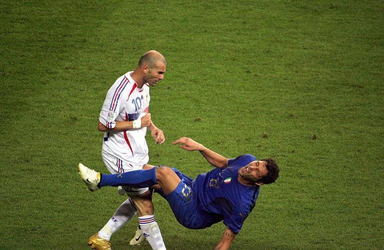


A journalist looks back at the numerous proposals put forward by Arsène Wenger, FIFA’s Global Director of Football Development, arguing that his suggestions for the sport may do more harm than good.
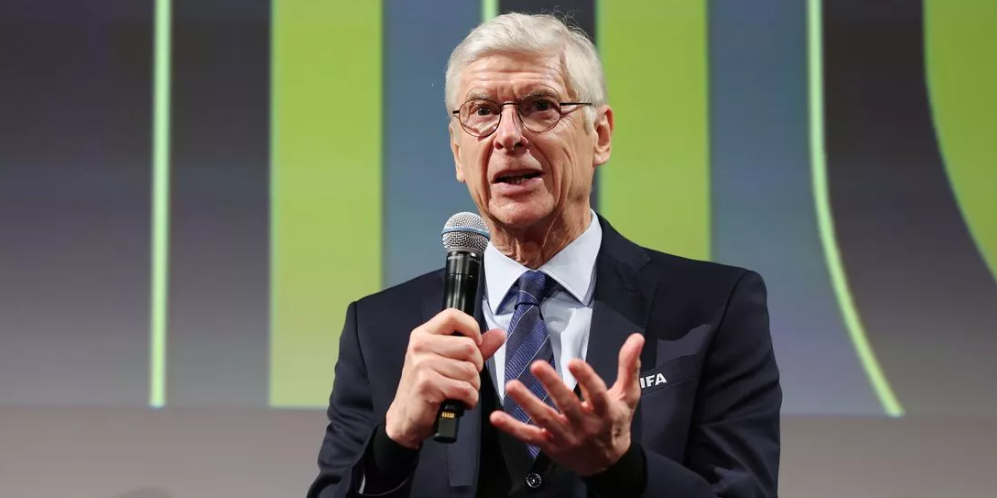
Journalist’s Commentary
He is one of the most revered managers in football history, a status that led to his appointment as FIFA’s first Global Director of Football Development in 2019. Yet this question may come as a surprise: does Arsène Wenger truly understand football anymore?
Wenger was once a great innovator in football. During his tenure at Arsenal, his reforms forced everyone to rethink every aspect of the sport: physical preparation, the internationalization of club squads, and the idea of football as a branch of art. His transformative power stemmed from his grand football vision. In contrast, Johan Cruyff is often hailed as a football philosopher, but he delved into the concrete details of the game; Wenger rarely did the same.
Wenger’s long-awaited autobiography was published in 2020, yet its surprisingly vague content cast doubt on how many details he actually remembered.
As a manager, Wenger was extremely meticulous about off-field details: training sessions were strictly limited to exactly 15 minutes; when involved in the design of the Emirates Stadium, he even specified the shape of the changing rooms and the slope of the stands. However, he never discussed on-field details with such specificity. Frankly, he seems to lack insight into the spatial aspects of football.
During his time at Arsenal, he never precisely explained the reasons for the team’s wins and losses, always attributing them to abstract traits: form, confidence, nervousness or fatigue. But he never seemed to consider whether the team was exposing weaknesses in specific areas or underperforming in certain phases.
He never talked about defensive compactness like Rafael Benítez, analysed transition between attack and defence like José Mourinho, or delved into half-space like Pep Guardiola. If Wenger were to enter the English football scene today, he would most likely not take on a managerial role—the core of a modern manager is tactical preparation and in-game decision-making. Wenger neither formulated specific match plans nor made decisive adjustments midway through games. Today, he might be better suited to a sporting director role.
It is for this reason that Wenger’s role at FIFA seems a better fit. He excels at talking about football from a macro perspective and analysing big-picture issues. For example, his proposal to change the U21 tournament to U23 to foster young player development may be reasonable. The problem, however, is that as a member of the International Football Association Board (IFAB), he is involved in formulating football’s laws. It is logical to have a respected former manager on the board, but he may be precisely the wrong person for the job.
The most obvious example is Wenger’s attempt to reform the offside rule. Like many, he is frustrated by VAR penalizing offsides for a striker’s toe being beyond the last defender, and advocates that "a player is not offside if any part of their body is level with the defending team". This echoes, to a certain extent, the controversy over "hairline offsides".
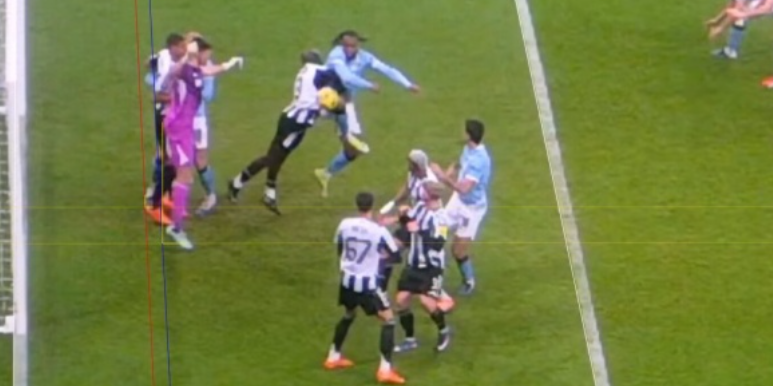
But this move has two major flaws: first, Wenger claims the reform will mean "no more millimetre-level offside decisions", which is clearly untrue—boundary decisions are inevitable under any rule; second, players could exploit the new rule by making lateral runs to set offside traps, then suddenly drop back to receive through balls, completely altering the shape of the game. The knock-on effect could see defenders reluctant to push up, instead dropping deep across the pitch. This would effectively turn football into a different sport.
Darren Cann, the assistant referee for the 2010 World Cup final, said in a recent interview: "The reform will lead to unforeseen and serious consequences", “VAR intervention will become more frequent, the game more fragmented, and it will be harder for linesmen to make instant judgments. If this rule is implemented, I would resign if I were still in the job.”
Wenger’s other proposals are equally puzzling: to speed up the game, he advocates allowing players to take free kicks on their own initiative (drawing on hockey rules). But this could create new problems—such as players chipping the ball over the wall to shoot directly. While this may boost entertainment value, it would fundamentally alter the nature of the game. What’s more, does football really need to be speeded up further?
In addition, he suggests replacing hand-thrown throw-ins with kick-ins in a team’s own half, which would make the game more reliant on set-pieces, and a kick can send the ball much further into the opposition half than a throw. He even proposed that corner kicks should be valid if they go out of play first and then curl back in—an extremely edge case, and the biggest beneficiaries would be nothing more than teams good at aerial bombardment.
Most of Wenger’s reform ideas could precisely harm teams like his Arsenal side back in the day—a team that, despite its flaws in later years, was extremely entertaining to watch. It may be sad to judge a football great in this way, but the reform blueprint of FIFA’s first Global Director of Football Development may bring far more risks than benefits.